The birth of an ancient sport: Yağli Güreş

Hello, welcome come aboard. We’ve been busy this week, preparing to head up to Bodrum to pick up our friends, Charlie and Megan. Bodrum is 167 nm away, Longo Mai has a conservative average speed of 5 or 6 knots thats between 27-33 hours of sailing. Unfortunately it’s not as simple as planning a car trip. The weather and safe anchorages play a large part in planning. We can’t leave Finike until after Thursday (06 Apr) and we need to be Bodrum Friday of the following week. Unfortunately the weather is finicky this time of year and while we have a day and a half of promised tailwind, it isn’t enough to get us all the way to Bodrum.

Especially as the following day’s forecast is predicting a head wind with gusts up to 30 knots. Over the last week the forecast has changed daily, and our plans have changed accordingly. Ian’s career was reliant on these environmental forces and his as relaxed as a Turkish dog resting in the middle of the road. (Trust me these dogs own the world and even the biggest trucks will swerve or stop and let them move in their good time.) He tells me if you plan early you’ll plan often. But he now takes it to the next level and is quite happy to wing it on the day. I’m not so lucky, its never been in my nature to be relaxed when there’s a deadline looming and I think it’s fair to say I’ve been a bit of a pork chop about it all. Thankfully Ian also weathers my moods well. Our friends are incredibly understanding and are now meeting us in the lovely town of Göcek. This is easily achievable for us and shouldn’t put too much of a dampener on our plans for their visit.

In the meantime we’ve also been taking advantage of the sunny day to mend the gel coat. This is a delicate grubby job with the sticky gel coat goop setting (going off) very quickly. The less excess goop the less sanding. Being new to this, Ian and I have a bit of sanding to do over the coming week.

We plan to leave Saturday and one of the last tasks will be to visit the Finike market in the morning before we leave. Just as it was in Brisbane, going to the market is a highlight of our week. There’s a restaurant on the way that makes a pretty good Menemen, which is like Shatsuka or Spanish eggs except the eggs are mixed in. Turkiye is predominantly Muslim country (officially non-secular) and as Finike is a conservative agricultural town, there’s no bacon or chorizo but the Menemen is always spicy and the ingredients are farm fresh making the flavours rich and flavoursome. The coffee is passable and my caffeine snobbery has been softened by necessity and now I’m just grateful its hot and passably drinkable.

After breakfast, we head down to the markets. Changing the route of our walk often; feeling like locals as we navigate the back streets. Next to the markets there’s a primary school and sports arena. Even on Saturday mornings there is the merry laughter and rambunctious shenanigans of kids at play during recess. Last Saturday we were lucky enough to see Yağli Güreş being practised at the sports arena.

Yağli Güreş is a popular sport in Turkiye. As a spectator’s sport its quite appealing. The wrestlers wear short leather trousers called “Kispet”, made of leather. The Kispet of adult wrestlers weigh a whooping 13 kilos. The only accessory the wrestlers, or pehlivan, team with their Kispet is a liberal dousing of olive oil. I guess there’s no surprise in me now telling you Yağli Güreş is known as oil wrestling.

The objective of oil wrestling, is not break your opponent but to to disable him. Therefore, unlike other wrestling sports the pehlivan can win by putting his hands down the other wrestler’s kispet and grasping the lower end of the pant’s leg and thereby prevent him from attacking. Yağli Güreş is serious business here in Turkiye with the National Champion winning 100,000USD, sponsorship and a very impressive gold belt.

The history of Yağli Güreş is as rich as you would expect given it dates back to 1000 BCE in Persia. The current rules date back to the Parthian Empire (238 BCE – 224 CE) and there is a strong tie to religion with the sport being conducted during Spring festivals. However, it didn’t become a sport in its own right until the reign of second Ottoman Sultan Orhan Gazi (1281-1362). Originally the matches could go on for days until someone won or died of exhaustion. It wasn’t until 1975 when someone with a little bit of common sense introduced a time limit.

This all very fascinating and impressive however I can’t help thinking how this wonderful sport really started. Maybe something like this.…

A troop of seasoned soldiers sit around a camp fire during a Spring Festival in some ancient city or other. They’re laughing and drinking as they boast about this battle or that fight. There’s a little more drinking and the crusty old veterans tease the junior soldiers about their lack of experience with their manly weapon. They all drink some more.

The camaraderie is high and spirits are flowing and everyone is happy until a procession of virginal maidens glide by, their hands in prayer and eyes cast down demurely. Their white shifts fluttering in the evening breeze, occasionally giving tantalising hints of the shapes beneath.

As the soldiers all quietened to watch the procession pass, Darius and Bahar, two of the younger fighters try to impress the ladies. Their mates egg them on as they all keep drinking. Their taunts and catcalls are sufficiently loud enough that the last virgin pauses and looks up with innocent doe eyes and blushes.

Darius and Bahar decide a wrestling match will prove their masculinity and prowess to this willowy maiden; ensuring her heart and more importantly her body is given freely and wantonly to the victor. So turning to their buddies, the two soldiers say “here hold our drinks” before throwing themselves at each other.

Their inebriation loosens their skills while heightening their emotions and soon the wrestlers forget the triviality of their purpose and begin to battle in earnest. Laughs become growling sneers. Curses become threats as a crowd grows around them. Their comrades and other spectators begin to wager on the outcome as more spirits flow lubricating the cheers and jeers.

Anoush, their wisened and grizzled sergeant, sitting at the next camp fire see ing the potential for a disastrous outcome, grabs a nearby jug and strides over to dump it’s contents over the two wrestling men. Except, alas, the jug isn’t full of water but olive oil. Slipping and sliding and unable to get a purchase on each other Darius and Bahar stop, gasping and spitting oil. Their surprise turns to humour and they begin laughing again.

Just as it looks like they’re about to clasp forearms and put aside their differences, someone in the crowd shouts out that Darius was the winner and he wants his bet paid out. Across the way there is a retort that Bahar was the winner “as any blind man can see”. Anoush, Darius and Bahar watch the mood of the crowd turn ugly. Anoush realising this could turn even nastier with the outcome worse than just the wrestlers getting mean and hurting each other, thinks quick and turns to Darius and Bahar and with a shrug, nods for them to continue.

The men struggle for a while as they figure out just how they’re going to win if they can’t get a good grasp. The crowd mood lightens as the fighters fumble along. Eventually, Bahar puts his hand down Darius’s pants grabbing the leg end and lifts him off the ground to dump him unceremoniously into a nearby pond. Anoush declares Darius the winner to the raucous laughter of the crowd. All threats and curses are forgotten as bets are paid out. Finally everyone toasts the wrestlers and plies them with more drink. There you have it Yağli Güreş is born!

Sometime later, Darius remembers the lovely maiden who had unwittingly incited the spectacle. He looks around thinking he’s in with a good chance. However she and her sisters have moved on (becoming bored long before Anoush intervened with the olive oil). Later Darius learns the maidens went on to the chieftain’s tent; which of course, is where all the money and power lies.

Fair winds and a dearth of sea monsters for your week ahead.

(Thanks to: Wikipedia, All about Türkiye, and A Sports with Religious Rituals from Hıdırellez Cult: “ Kırkpınar Oil Wrestling)

PS: I asked Ian what to call this weeks’s post and he suggested: “Lubed Up and Ready for Fun” or “it’s not romantic unless your eyes meet” (and that second one I’ve had to wave the politically correctness wand over) That’ll teach me for trying to include him in the creative process!

Jobs Done: Time for Feasts and Skydiving Spelunkers!

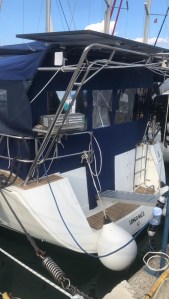
It’s that time of the season when everyone is working on their plans for Summer season. Boat jobs and projects are being finalised with a feverish anticipation of fair winds and warm waters. Ian, with a little help from me, has achieved so much this Winter that our boat now feels even more like home. A big part of this is the new canvas work which converts our cockpit into a cosy sunroom in Winter and a welcome shady respite from the sun in Summer.

Another major upgrade is our new tender (or dinghy). This is an essential bit of kit that impacts everything from mundane tasks, like provisioning to exploring adventures. Our old tender, which I affectionally named Baby Boat, was a little under-powered with only a 5hp engine. It was just too slow and not suitable for more than short trips to shore. It was also a bit too small, having just enough room for us and few shopping bags. Now that we haven’t yet sunk our boat and have somewhat proven our sailing skills we have plenty of friends and family planning visits. And, Baby Boat definitely isn’t up to the job.

Ian was able to source a new tender in Istanbul and could have it delivered but we had to wait 3 months. We couldn’t find the engine we wanted anywhere in Turkey. We talked to Customs about importing it but their advice was ‘get in your boat take it to Greece, bring it back and don’t say anything’. Which is exactly what we did. We had one delivered from Athens to the tiny Greek Island of Kostellorizo where we picked it up.

Our new tender is bigger (Highfields 310) and has a whopping 20hp outboard. We thought 10hp would be OK but 15hp would be better and only a few more kg. But then, the 20hp weighed the same as the 15hp and no one has ever complained about having too much power. From my perspective the best thing about the outboard is the electric start. I had an annoying habit of letting go of the string thingy on Baby Boat’s outboard which would result in bruises in lady places. Anyway, we’ve been running the new engine in at ½ throttle. Even then it’s still quite quick and I got little bit of a fright thinking about how fast our new toy will be able to go at full speed. For ‘safety’ Ian added foot holds to the floor for those “just in case” moments when the wind in our hair becomes a battering ram trying to push us out of the boat! They’ve since been tested and Ian has confirmed it’s possible to get air in the dinghy (he hasn’t had the prop out of the water, yet!).

Given the engine size and how far we can now travel from Longo Maï we decided to register our dinghy. This is just in case the pesky Coast Guard pulls us up as the dinghy is, in all fairness, well beyond the limits of the  definition of a ‘tender’. When registering or naming tenders, it’s not uncommon for them to be called something simple like “tender to Longo Maï” however Ian left naming ours up to me. Consequently our new tender is Internationally registered as “Grand Petit Bateau” (or Big Baby Boat). Photos to follow in upcoming posts.

Now that all these jobs have been done the only job remaining is the last minute ‘minor’ task of upgrading to lithium batteries. So Ian is now looking towards next Winter’s project list while we’re also preparing for our first visitors, Megs and Charlie, who arrive on 15 April. We’ll be sailing up to Bodrum to collect them and then spending a couple of weeks cruising along the coast to Göcek. We can’t wait to share this wonderful adventure with them.  

Since we can’t start our journey up to Bodrum until we visit our dentist next week we are filling in our days as best we can.  Ian has taken to improving his cooking skills with a monstrous roast lamb feast for twelve. He then doubled down on this with a smoked brisket extravaganza. Both were cooked using ‘old school’ charcoal inside a 44gal drum heater. Some said it couldn’t be done; well, Ian learned from the masters. For years good friends of ours, Charlie and Rowie, slaved for hours making delicious smoked meals all the while thinking Ian was just drinking all their booze. Turns out he could multi-task.

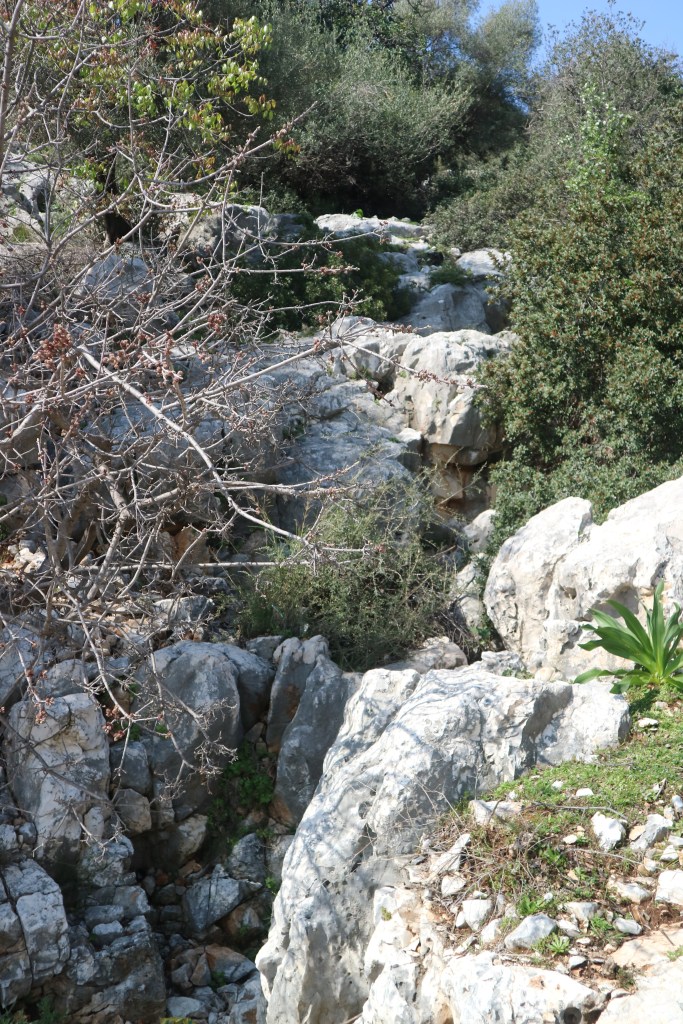
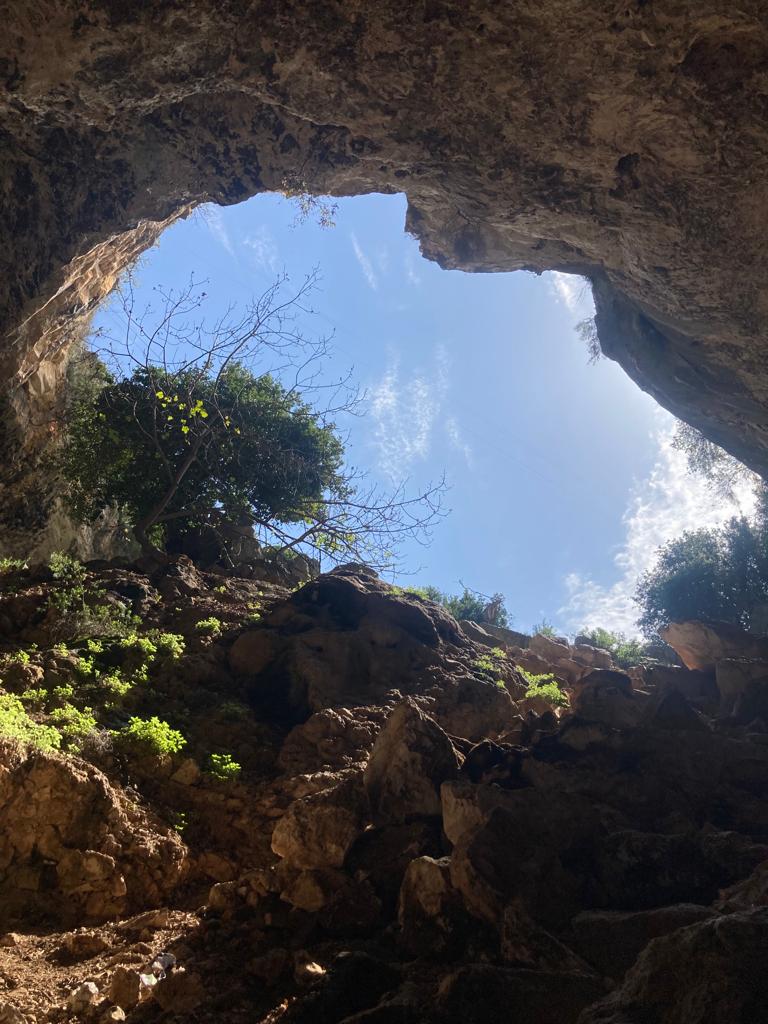
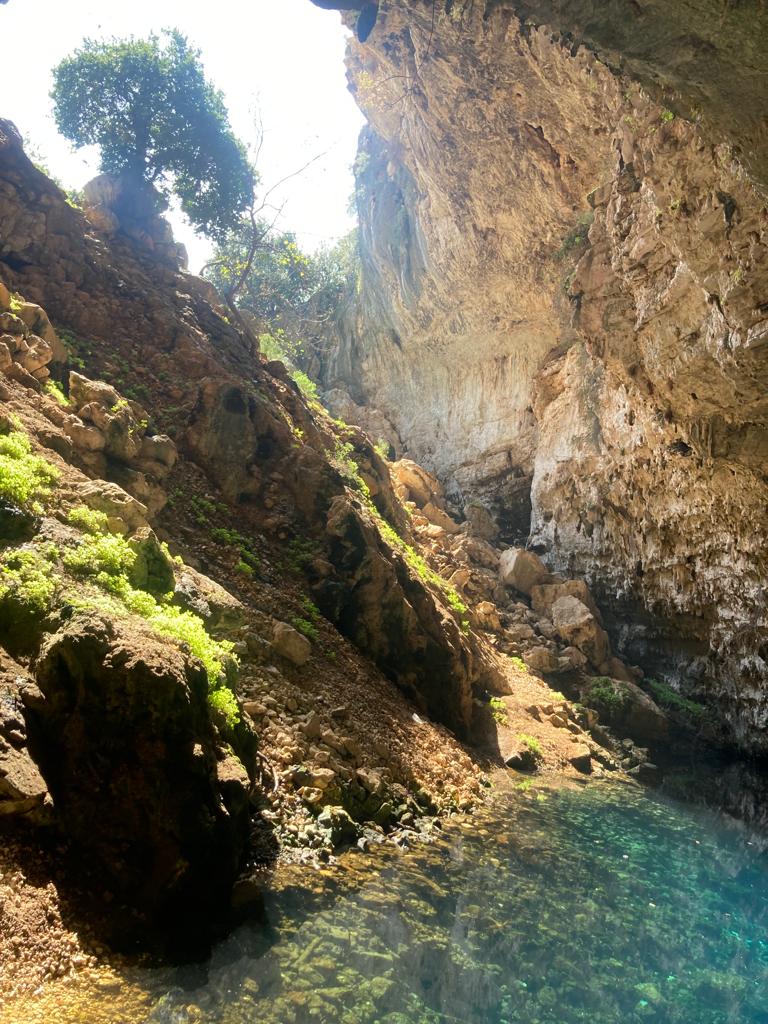
To loose the calories our most recent walking adventure was to find the elusive Finike Suluin Mağarasi (which translates to Finike Water Cave). The cave is a 25 minute walk from the marina and as with many noteworthy places in Tϋrkiye, there is no infrastructure protecting the site. The only protection is an one understated sign in Turkish on the side of the road, and an imposing overgrown hill with a non-existent path through the rocks, brambles and swarms of bees leading to the site.

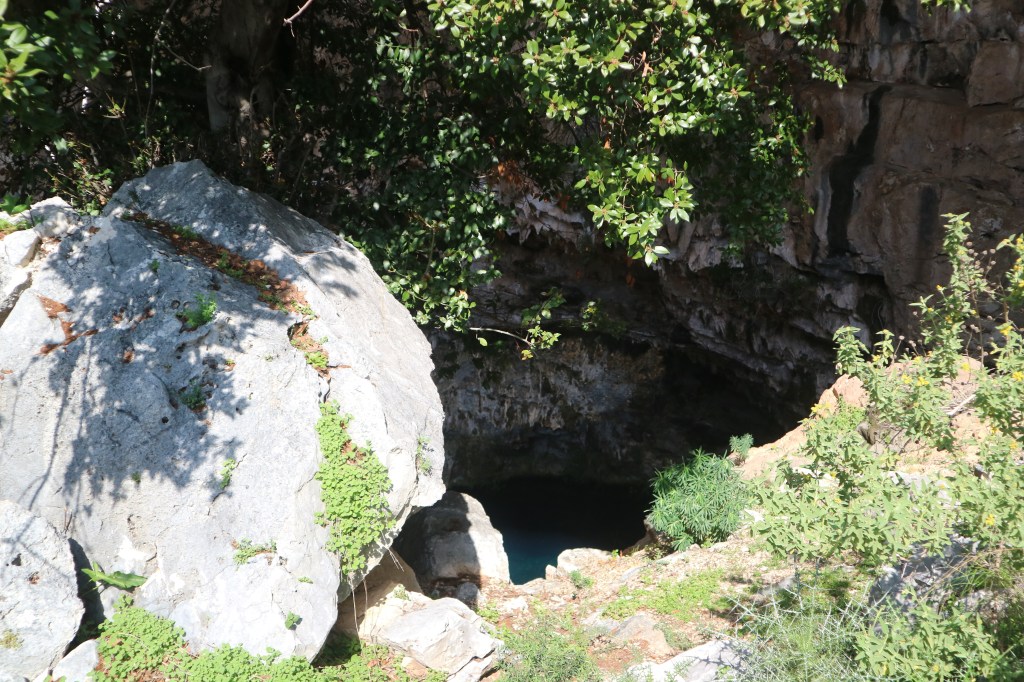
The cave is impressive, with a large turquoise pool at the bottom and sunshine reflecting off the walls. It’s possible to venture all the way down to the pool. There are bats nesting in the walls above and their chittering is reminiscent of cicadas in Summer. Between this noise and the twittering of the little birds in the area I found the cave quite calming.

A BBC report from 2010 and many of the tourist blogs list the Suluin Mağarasi as the deepest diving cave in Asia. However, it doesn’t appear on any English lists of caves I could find.

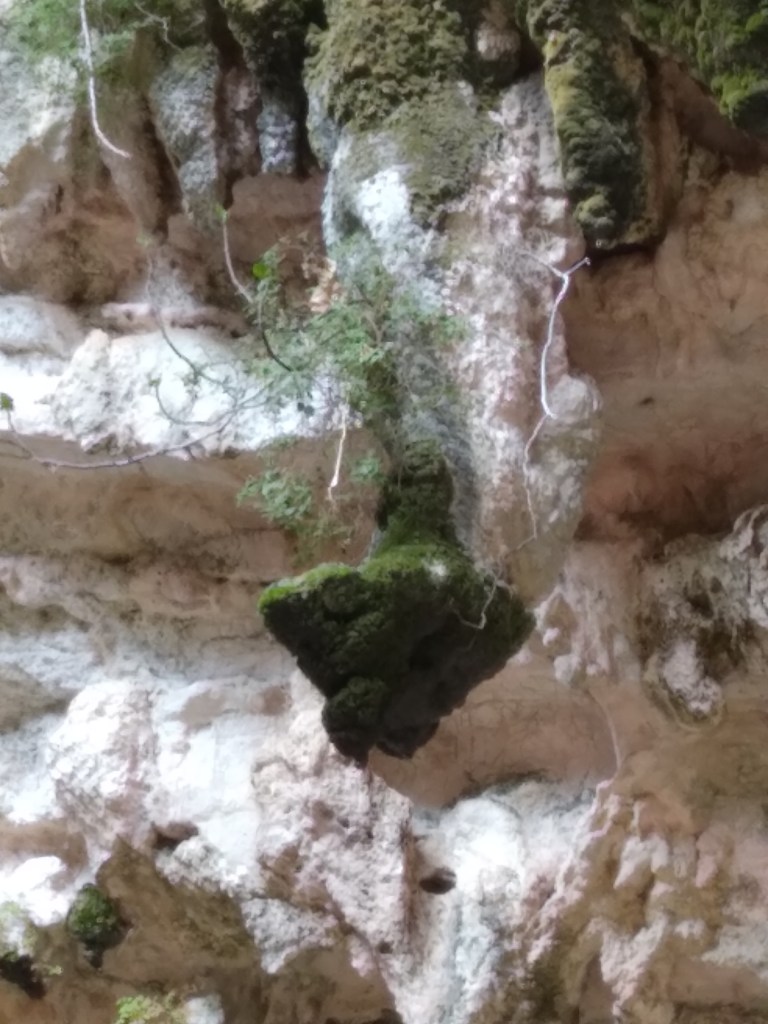
The cave is more than 122 metres deep and while the surface is fresh water, divers encounter saltwater at 15 metres. This is unsurprising given the ocean is just across the road. The water is very acidic and often there is a smell of hydrogen sulphide (rotten eggs smell). It’s probably not advisable to drink or swim here  especially given the cauldron of bats residing above for thousands of years. Despite the threat of bat guano, in 1995 an American diving excursion formally recorded the depth of the cave. Unfortunately, two German divers died during this expedition. Dripstones were also identified underwater which indicates the cave was once dry for some depth. Bones and ceramic shards were another find during the dive.

An archaeological survey of the cave site was undertaken by a local university in 2010. It discovered the remains of stone buildings near the entrance of the cave which date back to the Holocene period (circa 9701 BCE). They also found late Neolithic-early Chalcolithic Age ceramic shards (7000 – 5000 BCE), and flint and obsidian arrowheads. Carbon dating of bone needles showed it was occupied in 6000BCE (Neolithic).

When researching the cave, I had to use Google Translate and of all the mistranslation I saw my favourite references how the American dive team did not skydive into the cave. Ian says it probably meant they did not use air for the dive but instead used Nitrox (a mixture of Nitrogen and Oxygen used for deeper dives).

Fair winds and a dearth of sea monsters for the week ahead.

* I just love old fashioned words, often you can tell their meaning without thought or reference to a dictionary. I could have called myself clumsy, a stumblebum or a clodhopper but bungersome says it all really.

Thanks to: BBC (http://news.bbc.co.uk/2/hi/science/nature/8650104.stm), Wikipedia (Vikipedi), Hurriyet Turkey (https://www.hurriyet.com.tr/yerel-haberler/antalya/suluin-magarasi-concorde-sigacak-kadar-ucsuz-b-40518502) and Taşkiran, H, Suluin Cave – A Cave Settlement in the Western Taurus, 01 Jun 2020 (https://aktuelarkeoloji.com.tr/kategori/guncel-kazilar/suluin-magarasi)

Three Streets Back – Finike

Hello, welcome, come aboard. Weather in Finike has been a bit hit and miss the last few days. Reminds me of Melbourne, pouring rain on minute, sunny the next. Wednesday, however, was a slice of perfections. The skies were blue and the sun shone out long enough for Ian to drag me out for a walk “three streets back”. We often find ourselves in the industrial backstreets hunting for a Widget or Whose-it for some boat project or other. However, sometimes our adventures don’t include looking for unicorn-widgets or Fix-It Wizards.

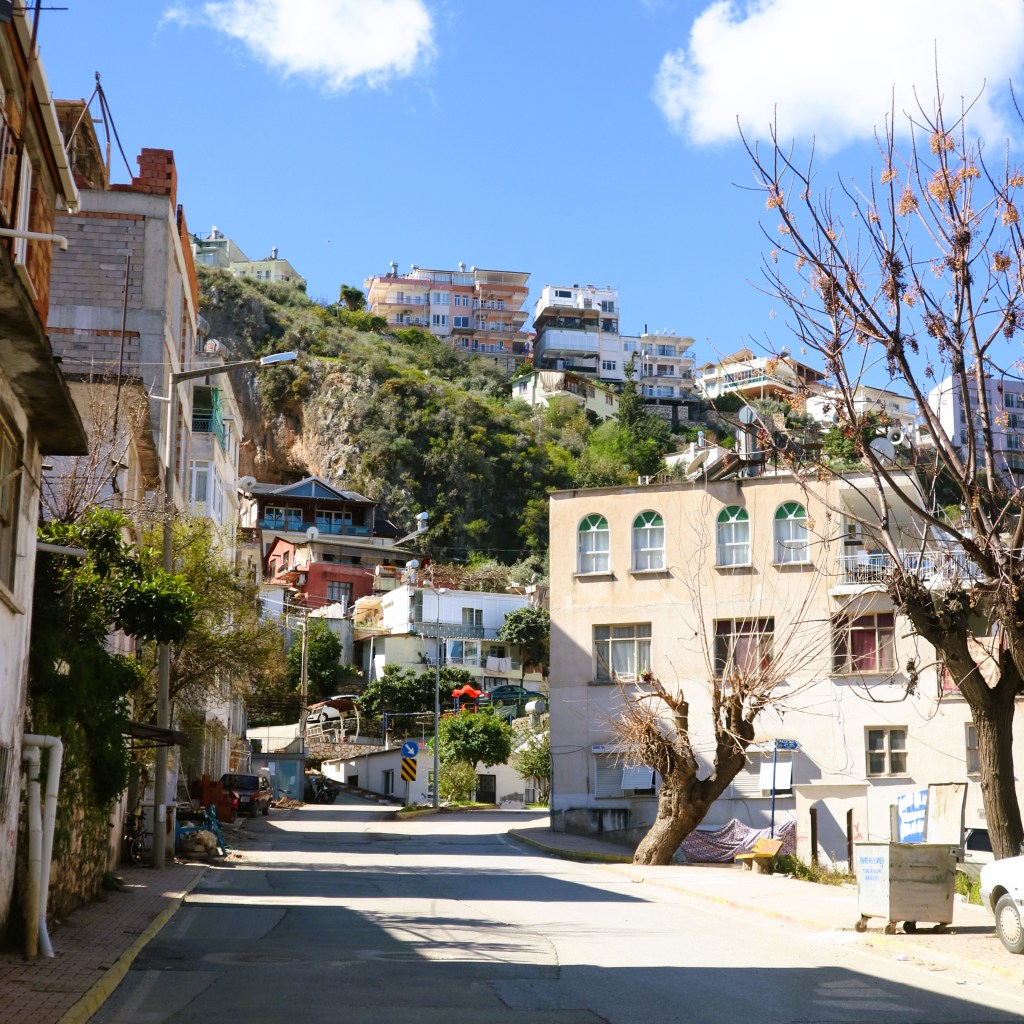
Wednesday was one of these “just because” adventures as we decided to walk up into the hilly suburbs behind the main streets of town. It wasn’t until we walked climbed the hillside (and I did a bit of research) that we began to appreciate the size of our “little town”.

The town has a population of around 12,000 people and the region boast almost 50,000, give or take the most recent births and deaths. I think this probably a conservative number at the moment given with the influx of those displaced by the earthquake and the war in Ucrania.

The agricultural foundation of the area dates back to at least 5 BCE when the region was known as  Phoenious. We were both surprised by the view looking back down toward the town and the acres and acres of greenhouses lay beyond the suburban spread. Agriculture and tourism are the main sources of income in the region, with oranges and other citrus fruit making up the largest crops. However, tomatoes, lettuce and all the good green, red and gold stuff are grown in enormous green houses. Of course the prime real estate along the coast is dotted with hotels and resorts, however even these compete with the farms.

At one time the area was ruled by the Byzantines, the Anatolian Seljuk State, the Tekeoğulları Principality and the Ottomans. You do not see much in the way of ancient history in Finike but it is on the Lycian Way so if you travel a short way in any direction, you’ll eventually trip over some ruin or archaeological wonder.

The ‘Battle of the Masts’, one of the major battles of antiquity, took place just off the coast of Finike in 655 ADE. This was the first decisive victory of the Arab fleet (200 ships) againstthe Byzantine fleet (500 ships). The Arab leader went on to Constantinople which, surprisingly enough, was named after his opponent Constantius’ Dad (or Grandfather, I can’t quite work it out which) Constantine the Great.

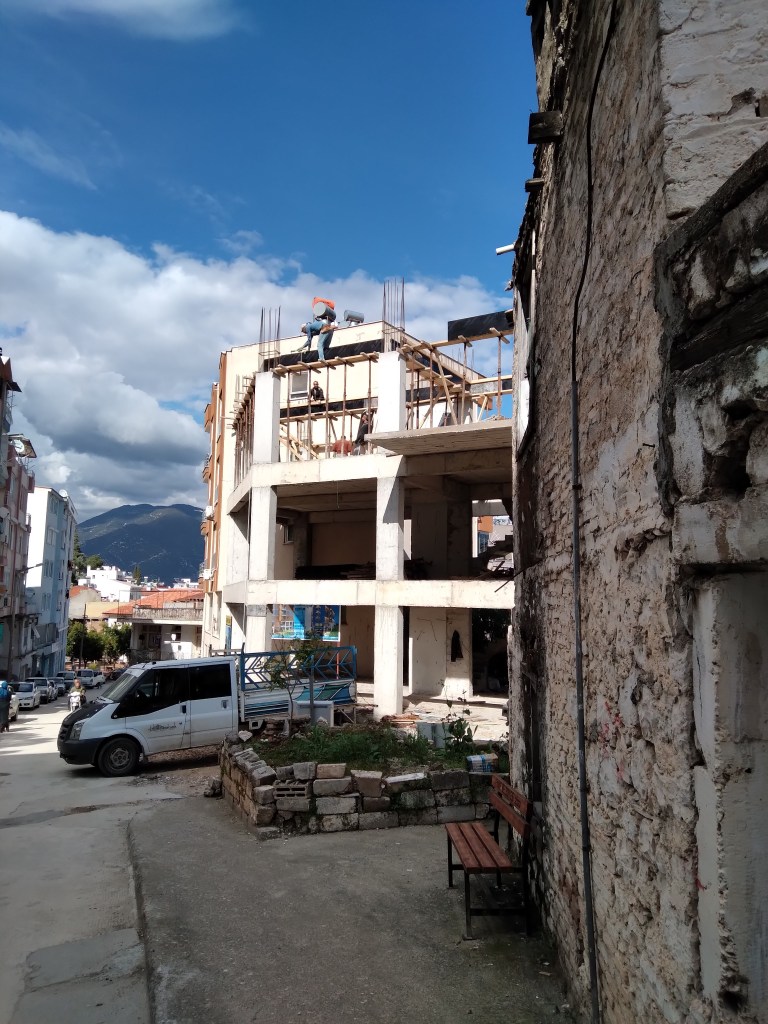
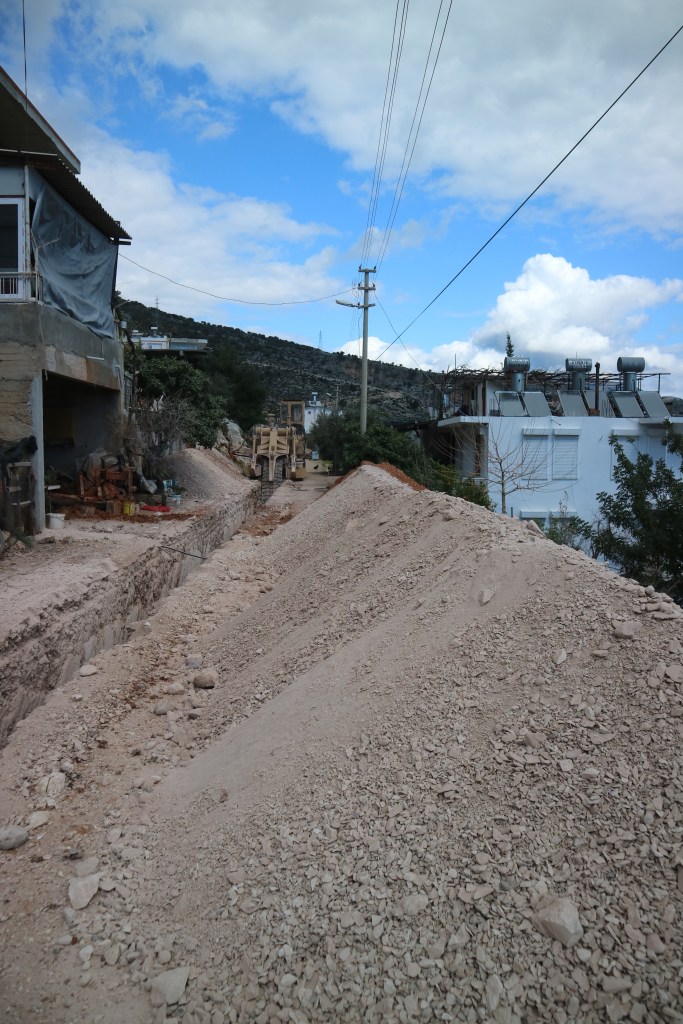
In more recent times, last Wednesday, we saw endless amounts development work going on. On some streets a new house or apartment block was being built. On other streets we saw road works, and sewage and other utilities being installed or upgraded. Occasionally all this work competed for space.

As you can see safety comes third

Yet, there is also decay and abandonment at every turn. There are half built buildings where folk a living on the lower floors while the upper floors are still bare steel and concrete. The Ministry of the Interior has a program called “Let My Home Be Your Home” that supports those who have lost their homes in the recent earthquakes. This would explain why so many of the partially completed residence are being occupied.

Ian also wisely suggested that the economy, the cost of money, politics will be having an impact on the construction and abandonment we see. I’m sure what he was saying is terribly clever, and the result of hours of inter-web research but I confess I was distracted by the lovely flowers.

For those that don’t know us well please don’t take my wanton sexist imagery as anything other than fact. Ian is dead keen on world economics, politics and such. I am not and count myself lucky that he worries about such things on my behalf.

There’s always a gaggle of kids’ about, playing games or riding bikes (the teenagers all ride mopeds). The younglings are watched by a distracted Mother or attentive Grandmother. The braver kids often say hello in English, pleased to be trying out their language skills. There’s always a wizened gentlemen or two sitting in the sun, a cigarette in hand and a çay beside them. No doubt they’re solving the world’s problems, if only we’d all listen! We always greet them with a sturdy Turkish “Merhaba” (hello). (çay – pronounced chai, a strong black tea made from Camellia)

To date I’ve been reluctant to intrude on folks time to ask for a photo but these two were happy to pose for a portrait.

We didn’t see many cats and dogs on this walk, however there were plenty of hens and more than a few confused roosters still calling out the sun despite it being lunchtime. We also heard the distinctive bleats and tinkling bells of a goat herd on a nearby hill. Beehives are also a distinctive feature of the landscape.

On one particular street we came by a rather special little creature. The street had a long deep ditch running the length of the road. I presume they are putting in cables or sewage pipes. The ditch was about 10 feet deep, at least 50 metres long and a few feet across. At one end was the ditch digging machine, and along the sides were large mound of dirt. Our side had enough room for us to walk pass, but the other side was quite tight for space. It was here that we came upon a tortoise. His shell no more than a hand span and in the way that all of these particular reptiles he looked ancient and wise. Unfortunately the little fellow wasn’t out for a stroll but was valiantly trying to cross over to the relative safety of our side of the road

No doubt he had designs on the shady garden behind us but tortoises can’t jump. (I know this because I checked on the inter-web: see http://www.tortoiseowner.com), so he was having some difficulties. As dirt skittered from beneath his feet into the ditch, I swear I saw him look plaintively at us as if to say “A hand here might be good. If you wouldn’t mind.” At which point, I may have squealed and danced about in useless panic. Thankfully, Ian, who is always better in a crisis, leapt to the rescue. Putting himself at grave risk of falling into the hole, he used the ditch digger as a bridge collected the beleaguered tortoise. He then returned to our side, and gently deposited the little reptile beneath a geranium bush.

I didn’t see if the tortoise gave Ian a nod of thanks so I made sure to give him a sloppy kiss as reward for his bravery.

As we went on our way, I pondered upon what the tortoise thought about his rescue. Ian, whose quick wit is faster than his leap into action, proclaimed it would have been something like, “Whilst upon my journies I came upon the Pit of Despair. And, whence I thought all was lost, the hand of the great All Mighty God came down upon thine shell and raised me up, as if upon golden wings, and carried me over the Pit to my salvation! For thine is the power O’ Great One.

So from the Mighty God and his adoring fan we say goodbye and… fair winds and a dearth of sea monsters for your coming week.