Arriving in Greece – Dealing with the Schengen Shuffle and seeking Devine Intervention

Hello, welcome, come aboard. We’ve been busy adventuring, doing new things and hope that you have had an equally lively and happy time since our last post. I’m a bit behind on my blog, so for a quick update, since I last wrote we’ve battled to escape the Meltemi winds, visited Athens and Delphi, viewed the Corinth Canal from above, then motored Longo through. After exiting the canal, we pounded into wind and waves with green water flowing over cabin top for over an hour. Aarrgh, the decks were awash! To make it even better, a thunderstorm was developing near our destination. It wasn’t close enough to cause any real problems, but we did have to push through a 37 knot squall which dropped our speed down to 3 knots (5.5kph) for about 20 minutes before reaching a safe harbour.

Now that’s all behind us, the Ionian thus far is proving to be sedate and beautiful. But we are having to zoom through quite quickly while taking notes for our next visit when we have more time. I’ll cover more in future blogs, but for now I must jump back to the end of my last.

Land Ho! – Greece

On that note, we left you in our last post as we headed for the little Greek island of Symi also known as Syme, Simi or Σύμη. This island is just 13 nautical miles (24.08 km) from Türkiye and on a good day you can sail across in just over two hours. Interestingly, it’s not the closest Greek island to Türkiye. This is claim goes to the tiny island of Kastellorizo (aka Castellorizo, Καστελλόριζο, Kastellórizo, Megisti) which is just 1.4 nm (2.5 km) from the Turkish mainland. You can sail this in about ¼ of an hour, not including raising and lowering the anchor. We visited Kastellorizo twice in the last 18 months, once with the lovely Rhonda; here are some photos of this gorgeous little Greek island.

The tiny island of Kastellorizo reminds me a handful of Sweetheart Lollies. In addition to the pretty little village, there are a string of caves that are accessible by dinghy and kayak. The largest and best known is the Blue Cave. I wonder why? The ferry comes in a couple of times a week, even the Coast Guard and the Navy boats move out to let it come in.
We were lucky to share our second visit to this island with Rhonda. Rhonda is very dear to us, as her daughter, Georgia is marrying our Ned. And when Ned was extremely ill it was Georgia and Rhonda who took care of him when he was in Canberra. Ned and Georgia’s wedding in April 2025 will make our family ties official.

The open loathing these two “NATO allies” have for each other makes crossing the sea border interesting. Both Coast Guards and Navies actively patrol the borders and it’s not unusual to see fighter jets flying the border above. We’ve been shadowed by both Coast Guards numerous times while sailing along the border. We’ve also heard the Greek Coast Guard transmitting whistles over the radio calls of the Turkish Navy to disrupt their military games.

Nonetheless it’s common place for many motorboats, yachts, ferries, cruise ships and fishing boats of different nationalities to travel between the Greek islands and the Turkish mainland. Most of the time the appropriate check out and in formalities (Quarantine, Customs etc) are adhered to, though the little fishing boats don’t seem to care about such lofty things like national borders. The increase in refugee boats between the countries does have the Greek Coast Guard paying more attention to smaller boats than they may have in the past.

The Madness that is Summertime in the Greek Islands begins

Our trip across the borders this time was uneventful, and we puttered into the anchorage outside the village of Pedi, on the island of Symi, in short order. Last year we stayed in the nearby town of Symi, and it was madness. Symi town is a hub for tourist ferries from within Greece and those coming from Türkiye. The town dock is conveniently close to the town centre, but the regular ferries create large wakes which bounce your boat about. This is not only irritating but can be dangerous if we aren’t securely moored some distance from the stone town wall. It’s like being home, doing your housework when suddenly you (and your home) are on a particularly gnarly roller coaster ride. The neighbouring boats are the other carriages but instead of them being in front and behind you they’re all tethered alongside, rubbing fenders and hulls for those unlucky enough to not have adequate fenders. It’s enough to make even a hardy sailor swear.

This time, on advice from a hardy sailor, we arrived in the quieter bay of Pedi. Pedi has no ferry traffic, only the occasional water taxi leaving a small dock that’s big enough for just one boat. There’s also a small “town dock” marina to the side which is well maintained and has helpful staff (to be fair Symi’s staff are helpful if a little harried). There’s also an option to anchor out which is always our preference as the boat can swing with the breeze which is much cooler.
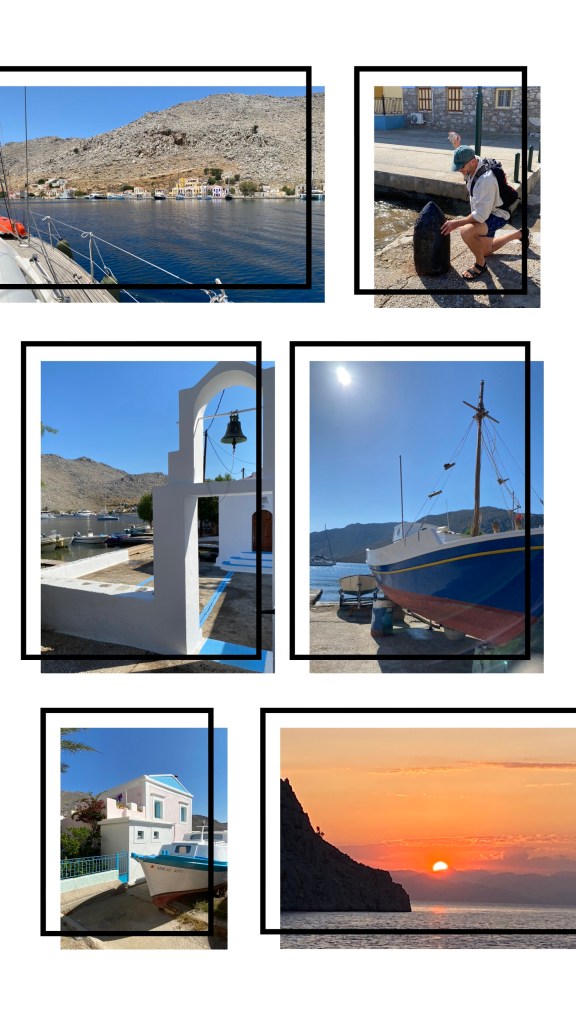
This is Pedi on the island of Symi. It speaks for itself … except the picture of Ian applying for a job as an ordinance expert. Needless to say, he’s still retired.

It’s Just a jump to the Left – Bureaucracy in the Schengen Zone

You’ll remember in our last post I mentioned getting an agent in Türkiye to check us out of the country. Greece is much simpler; the option of agent is always there but it isn’t a requirement. Since we’re trying to understand the Schengen rules better, we took the opportunity to do our own paperwork in order to ask some questions along the way.

For those non-yachties you may be vaguely interested to know that one of the biggest pains in our transom (that’s a boats ass) is the dreaded Schengen Shuffle. As anyone who has flown into the Schengen zone* will know, you can only stay for 90 days in every 180 days. However, since the sailing season is April through to November, we must use non-Schengen countries* and trips home to fill in the rest of our time. Of course, the non-zone countries have their own visa restrictions. This all makes it a bit of a tricky thing to plan a sailing odyssey, especially when you consider the weather implications that always overlay our decisions to sail.

In addition, there are the laws that apply to our boat that we must consider. Thankfully Longo is Polish registered** and VAT paid (like GST), so unlike her crew, she can stay in the zone forever. Many of our friends, who proudly fly the Australian, Kiwi, or other non-Schengen zone flags, have additional requirements they must meet while sailing the Zone.

A lot of mental effort and anguish goes into how we can manage our time in and out of the Schengen zone. Dealing with bureaucrats is a source of lots of conversations and consternation, which only adds to the anguish. Stories abound of cranky officious bureaucrats who don’t know their own regulations or are just having a dreadful day. We’ve heard of favouritism and/or bias against certain ethnicity and even boat flags (apparently our Polish flag could lead to us being mistaken for pirates!). Unfortunately, from a recent conversation I understand that there may also be some prejudice against female skippers, with some officials asking for evidence of their credential but not that of male captains. In other words, the bureaucrats are just people with all the normal biases and fallibilities as other human beings; unfortunately, they have a certain amount of power which allows them to exercise those biases and fallibilities more often.

I have a secret weapon at my disposal that comes in very handy when dealing with even the crankiest of cranky official. That secret weapon just happens to be Longo’s devilishly handsome captain! I can confidently say I’ve yet to meet an official, man or woman, who has not succumbed to Ian’s polite respectful charm. Or is it the sparkling green eyes and that roguish smile of his? I’ve never asked. We’ve had our crew list fee waived because the lovely Port Police lady was shocked that he was a grandfather (“surely too young”) that she blushed hand to chest in a swoon. She wasn’t interested in me being a grandmother … hmmm. Some years ago, using this same charm and his Aussie accent, Ian was fast tracked through USA Department of Motor Vehicles process while I had to wait in line for a further twenty minutes. Alas we were different lines so I couldn’t ride his coat tails on that occasion. His manner always wins out and thus far we’ve never had any problems (I note that most of the other skippers I’ve met are all just as polite and respectful as Ian, perhaps it really is Ian’s devilish smile?)
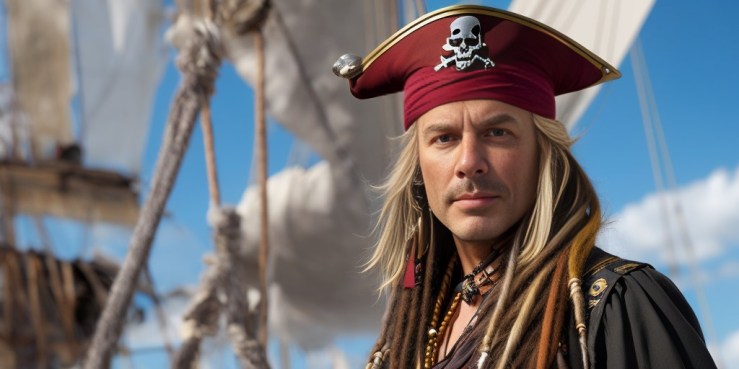
It’s easy for Ian to be confident when this is how he thinks he looks after a bottle of champagne!
Thanks Truman for the excellent picture.

Most of the sailors we’ve meet, try hard to “live within the rules”. Though we are always open to any regulation interpretation or loophole that we might be able to exploit to extend our stay. So, Ian applied a little of his charm and we managed to spend the better part of an hour with the Port Police in Symi trying out various scenarios and interpretations of the regulations to see what might give us more than the allotted 90 days in Greece. Thankfully, it was a quiet day in Symi, and the lovely officer was more than happy to answer our questions. This time we weren’t successful in eking out more time in Greece, but we will be more prepared next time.

At this point I acknowledge those of you who may be experiencing a spot of schadenfreude when I talk about our very “first world” problems of not having enough time to sail our yacht in the countries with the prettiest islands and anchorages, historical hotspots, and lively culture! Yes! We are bloody lucky to be here, even though we worked bloody hard to make it happen.

Before we had our discussions with the Port Police in Symi we did a little bit of online sleuthing to see what might give us a better chance of extending our Greek adventures. What I thought was most interesting from our little journey down that rabbit hole are the following two non-bureaucratic tid-bits:

  • Whenever we cross a border into a new country, we must fly a yellow flag called a Q Flag, or the Quebec or Yellow Jack flag. This flag is only removed after all the check-in procedures have been completed. Historically this signified a vessel that is, or might be, harbouring a dangerous disease and needs to be quarantined. Two Q Flags flown together is an express request for health clearance, i.e. you know you’re carrying the plague. Nowadays the Q Flag signals that the vessel has not been cleared into the country. This process can include Customs boarding and inspecting Longo. We’ve only had this happen once and they were very respectful of our home. They’re mainly looking for undeclared people, but officially they’re also looking for cigarettes, other contraband or greater than the allowed bottles of alcohol. Ian’s investment into spirited commodities could seriously be at risk unless he can turn that sparkling charm to effective use and convince them that an entire bilge filled with gin and another with champagne are just our normal personal use holdings. On the subject of “undeclared people” we had an interesting conversation with a Greek technician working on our boat last year about the profitability of such activities. This is the kind of story best left for the bar stool.
  • Greece has over 6,000 islands, not to mention the mainland, all worthy of exploration, I think! Of the 6,000 islands, there are only 200 that are inhabited by 50 people or more. Then there is Italy, Croatia, France, Spain, Malta and Portugal and their satellite islands, the biggest that come to mind being Sicily and Sardinia (Italian), and Corsica (French). We might not visit every anchorage or even every island, but we are keen to explore every country fully. By my count we’ve only visited, most of Türkiye, 16 Greek islands and part of the Greek mainland, and a handful of Italian and French locations (our trip to Matla to pick up SV Chill doesn’t count); we have a way to go.

Symi, an Island of Contrasts.

Symi is a rugged island with a history of ship building and sponge diving. It now exists almost entirely on tourism. If the name of the island is familiar that might be because it was where Dr Moseley unwisely went for walk in the heat of the day and didn’t come home.

Symi town is crazy with the noisy hub bub of tourists. This is a sharp counterpoint to the sombre and weary faces of the refugees we saw being marched through the town on a previous visit. At the height of the season, when it’s hot and sticky, the hordes can be oppressive and there is little respite in the form of a breeze or shade unless you find a chair at one of the plentiful cafes.

Pedi, on the other hand, is much quieter. It feels like the place where the locals go to hide from the crowds. Consequently, it’s a lovely mellow place but it’s not quite my favourite place on this island. More on this in a minute, first a few interesting facts about the island generally:

  • Symi is mentioned in the Iliad as the realm of King Nieus who fought in the Trojan war. Nieus would have been the most handsome man in the Aegean forces if it hadn’t been for Achilles. I wonder how he felt about of being the runner-up.
  • In 1943 the Nazi’s occupied Symi which was previously “owned” by the Italians who may have nicked it from the Greeks who nicked it from the Ottomans who nicked it from the Greeks and so-on and so-on. However, in 1945 it hosted the formal surrender of German forces in the Aegean to the British. The British then governed the island until it was handed back to Greece in 1948.
This is Symi in all its glory .  The owner of this boat needs to employ the same bird removal method as Ian uses on Longo – a handful of crackers after sunset. A rare shot of a vacant laneway a couple of streets back from the town dock. The impressive gentleman is Stathis Hatzis, was a free diver who in 1913 dove to a depth of 88 meters, for 4 minutes, in an attempt to locate and tie the anchor of the Italian battleship Regina Margherita which had been lost on the ocean floor. It took Stathi three days to find and secure the lost anchor, making a total of 16 record free dives from 50 to 88 meters depth.

Monastery of the Archangel Michael at Panoramitis.

All this is interesting, but for me the gem of the island is the Monastery of the Archangel Michael at Panoramitis. This sits in a beautiful and protected bay on the other side of the island from Pedi and Symi town. We’ve anchored here twice before but this time we didn’t get the chance to go back as we had important places to be. Still, I wanted to share this marvellous magical little place with you.

The beautiful Anchorage of Panoramitis. Ian is approving the local visitor’s rules which bans among other things nudity. This might seem obvious to most, but after being in the Med for a while now I can say that the ban is necessary to maintain the modesty of the Monastery. (Ian and I have not worked out why but it’s mainly Germans that shed their togs the minute they drop anchor.)

In addition to being one of the safest anchorages in the area it is host to friendly turtles. I had the privilege to have one pop up to say hello when I was out on my kayak. It’s a shallow, but not too shallow, basin with plenty of room for a few boats at anchor. It’s protected on three sides by island hills that are craggy and might be considered uninviting to any but the hardest olive trees and goats.

However, there seems to be a thing here in Greece about building beautiful monasteries and churches in the most rugged of places. Panoramitis is by no means the most rugged or isolated monastery we’ve seen but it is one of the most stunning.

Archangel Michael of Panoramitis Monastery is one of the seven sacred sites along an imaginary line stretching from Ireland to Israel,  known as “The Sword of Saint Michael”. Michael holds a place in all Christian denominations, Islam, Judaism and Baha’i Faith. So not a light weight by any stretch.

The monastery is a beautiful 18th century Venetian building with the highest baroque bell tower in the world. Within its wall is a church, which is reasonably new, but it rests on the foundations of an earlier church dating back as far as 450 CE. This older church rests over an ancient temple dedicated to Apollo. Panoramitis is amongst my most treasured places from our adventures. Its tranquillity is only broken by the bells ringing out to welcome the small tourist boat that brings folk from the nearby island of Rhodes once or twice a day.

At other times you can hear the monks singing. There is only limited accommodation within the walls of the monastery and a semi-regular bus service. Otherwise, there’s a taverna, a cafe and a brilliant little bakery, the ubiquitous goats and not much else going on. It’s not what I would call a hotspot for most visitors to the region. For all these reasons, I love this place.

I love goats and their can-do attitude! We’ve learned never to leave hire cars under any lush trees. The odd photo of a mechanical dinosaur is actually a WWII gun turret which still has most of the gun in place. Ian (inside the turret) was a tad disappointed to find out that there was no bang left.

I’m not the only one that loves Panoramitis. The Archangel Michael is especially fond of Panoramitis. In fact, folks claim to have heard him sweeping the floor of the church at night. He must like to tidy house after a busy day of smoting. Consequently, it is common practice for supplicants to bring Michael a broom in the hope he will grant them a boon in return. It is also common to see bottles containing prayers inside the Panoramitis church. These bottled prayers are said to be the prayers of Greek sailors that have washed up on the shores of the monastery.

The Archangel who is also known as Saint Michael the Taxiarch. A taxiarch is a brigadier. In this context Michael is the leader of the heavenly host. He’s definitely not someone you want to piss off. Michael is not above showing his displeasure at those that promise a broom and don’t deliver. He’s has been known to prevent ferry boats from leaving the dock when they’re carrying wayward passengers. The captains on the ferries will make an announcement over the PA to the passengers saying that someone has forgotten to fulfil their promise and the ferry can’t leave until a broom is procured from the cafe and left in the church for the Archangel.

I’ve read the reviews of a few cruisers who don’t hold the same fond memories of Panoramitis, claiming dragging anchors and rolly nights. I’m not sure I would be brave enough to write such a negative review myself, Michael is after all the Angel that cast Lucifer “the Morning Star” out of heaven!

Some shots taken inside the Monastery and the Church. The silver Icon is of Archangel Michael in all his glory. Below is more information about this incredibly special icon. In the last photo you can see one of a broom left propped inside the Monastery, ready for when Michael has a hankering to come a clean house. (Thanks to Ian for taking the photos inside the Church.)

Michael is the patron saint of the island and guardian of sailors in the Dodecanese. I guess this is a role he shares with Saint Nicholas. The church is home to a very special icon of the Archangel Michael. Here’s the best inception story of the Monastery that I could find:

 “While a pious hostess – “Mario of Protenios” – was digging on her property in Panormos, she found under a roof a small old icon of the Archangel Michael. With extreme secrecy, she took the Icon and carried it to the iconostasis of her house in Symi, where she was burning a dormant candle. The next day, however, she found that the Icon had disappeared. When she later went to her estate in Panormos, she found the Icon in its original position under the rope. The housewife brought the Icon back to her house, but it surprisingly returned to the place where it was found. This event was repeated three times. The woman’s sorrow ceased, when she saw in a dream the Archangel Michael, who expressed to her, his desire to remain in Panormos. After this, the pious woman now announced the fact and with the assistance of her compatriots, she erected a small naydrio, on which she enthroned the Admiral”.

This website also notes that the silver work on the icon was a later addition likely done in the 1700s. www.panormitisymis.gr

Such miraculous icons are known as Acheiropoietia which means they are “made without hands”. The most well-known and maybe controversial(?) is the Shroud of Turin. We have seen at least one other acheiropoieton, which I will tell you about in my next post.

Finally, I found a Greek news report (Archangel Michael Miracle) that details the miraculous disappearance and reappearance of the face on the Icon during the Great Vespers service on 07 November 2008 (the Feast Day of Saint Michael). Unfortunately, though reasonably, the news report is in Greek.

I had best stop there or else I will be accused of writing a book on this beautiful and magical little place.

I was disappointed that our visit to Symi this time wouldn’t include Panoramitis as it meant I didn’t get to deliver a broom to Saint Michael which I had plan to do, maybe I’ll drop a bottle in the ocean with a prayer asking for assistance with the bureaucracy instead. However, we had to set sail for Kos, where we would be collecting one of my best mates, Lesley. But I’ll cover that next time, and until then, we wish you fair winds and a dearth of sea monsters on your journey through life. And an extra special thank you to all those who have stuck with this rather lengthy post until its end, I love you all. x

* EU Schengen Zone: Austria, Bulgaria, Belgium, Czech Republic, Croatia, Denmark, Estonia, Finland, France, Germany, Greece, Hungary, Iceland, Italy, Latvia, Liechtenstein, Lithuania, Luxembourg, Malta, Netherlands, Norway, Poland, Portugal, Romania, Slovakia, Slovenia, Spain, Sweden, and Switzerland. Those in bold represent the countries are all part of “the Med” where we will be sailing over the next few years. In addition to these countries the non-Schengen countries in the Med are Türkiye (2022 winter), Cyprus, Nth Cyprus (2023 winter never again!!), Montenegro (this year’s winter) and Albania.

** The Polish flag is a “flag of convenience”. Its benefits include a once off registrations (non-annual), for us no requirement to complete a survey (the boat has been surveyed but not for registration purposes), its cheap (always a bonus), and can be completed online (we love automation that works for us). It is also for these reasons that some officials believe that pirates and refugee runners use it.

We Farewell Türkiye – Datça and Cnidos/Knidos/Κνίδος/Kindos – or whatever you want to call it!

Hello, welcome, come aboard. We hope life has been kind to you in the last little while. It’s hard to believe that it’s the end of June! The year is half gone already. I was thinking about what we’ve done this month and had to chuckled. Didn’t I say something about “going slow”? It’s not been a full month since we last posted to the blog. In that time, we’ve left Türkiye, entered Greece, visited many anchorages/towns most of these on Greeks islands, travelling over 200 nm (370 km) including one 12-hour moonlit trip. That distance travelled doesn’t include the road trips we’ve also done to explore a few of the larger islands. We’ve even had our mate, Lesley visit with us for a few wonderful sun-drenched days. We’ve also been visited a couple of times by Meltemi winds (strong Northly winds) which have kept us in port or on the boat for days at a time.

This all seems crazily busy, and yet it still felt like a “go slow”. Some places we stayed for days, others we stopped in over night and kept on moving. I haven’t felt rushed except to say we were keen to move past the Meltemi zone (aka the Aegean Sea). Not just because of the Meltemi winds but because of the madness that is the summer charter boat season. There are about a dozen islands that we’ve not explored including some pretty famous ones, like Santorini and Mytilene. Thankfully, we will be returning early next year (outside the Meltemi and charter boat season) to explore these islands at our leisure. We figure this is advisable as, ironically, the winds make me cranky, and the levels of ineptitude and dangerous sailing we often see among the chartered boat crews is enough to make even my peaceable captain want to raise the skull and cross bones.

Selimiye – “the French Riveria” of Türkiye?

Anyway, when we left the last post, we were leaving Bozburun to stop off in Selimiye (both in Türkiye) as we were keen to share this pretty region with SV Chill. One very enthusiastic shopkeeper told Ali and I that Selimiye is known as the “French Riveria” of the Turkish Coast. However, we decided this was more a justification for the $600 price tag on the bag I had been eyeing off than any reality. Selimiye is a pretty, little village with a few lovely shops and bars along the shore and not much else. However, it’s worth visiting just for the amazing fjords-esque entrance to the bay. On our sail in this time, the weather was so lovely that Ian and I wove between the islands doing two knots (less than 4 km) under sail while we enjoyed our lunch. There are ruins on the islands and the sounds of goats in the distance.

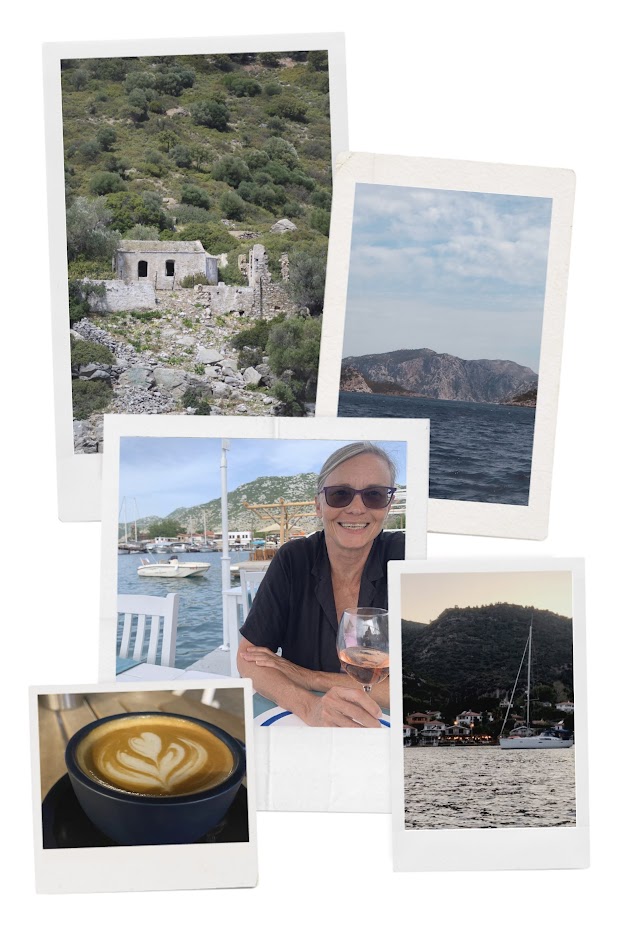
Funny Thing! Above represents most of the photos I have of the lovely Selimiye. I’ve been here three times now. For me this is a novelty as I’m normally in a tither trying to choose among my hundreds of photos.
Special thanks to Ali for capturing this rare “proof of life” photo of me enjoying a Turkish Rosé  on the Turkish “French Riveria”.
Back during our first visit to Seliiye in 2022 we had our first flat white coffee since leaving Australia. While don’t remember if it was actually very good but if the last visit is anything to go by it probably tasted like dirty dish water strained through one of Ian’s grubby socks.

Trendy Datça

We didn’t stay long and after sourcing fuel and our dreaded blue card stamp from a neighbouring marina we sailed across the Bay of Doris to Datça, Türkiye. I love Datça, and while some might say I threw a mini tantrum when I thought we weren’t going to make it back there, I would prefer to say I was forthright during our planning session. While in Datça, a Meltemi blew in, so we ended up staying for well over a week with only an overnight trip out to Knidos to break up the visit.

I at least was not heartbroken as we found time to check out Datça old town. It’s about an hour’s walk uphill in the heat. In other words, far enough to make us all hot and sticky and in need of an ice cream when we got there. Despite the heat it was a lovely day and there were plenty of folk out and about in the town.

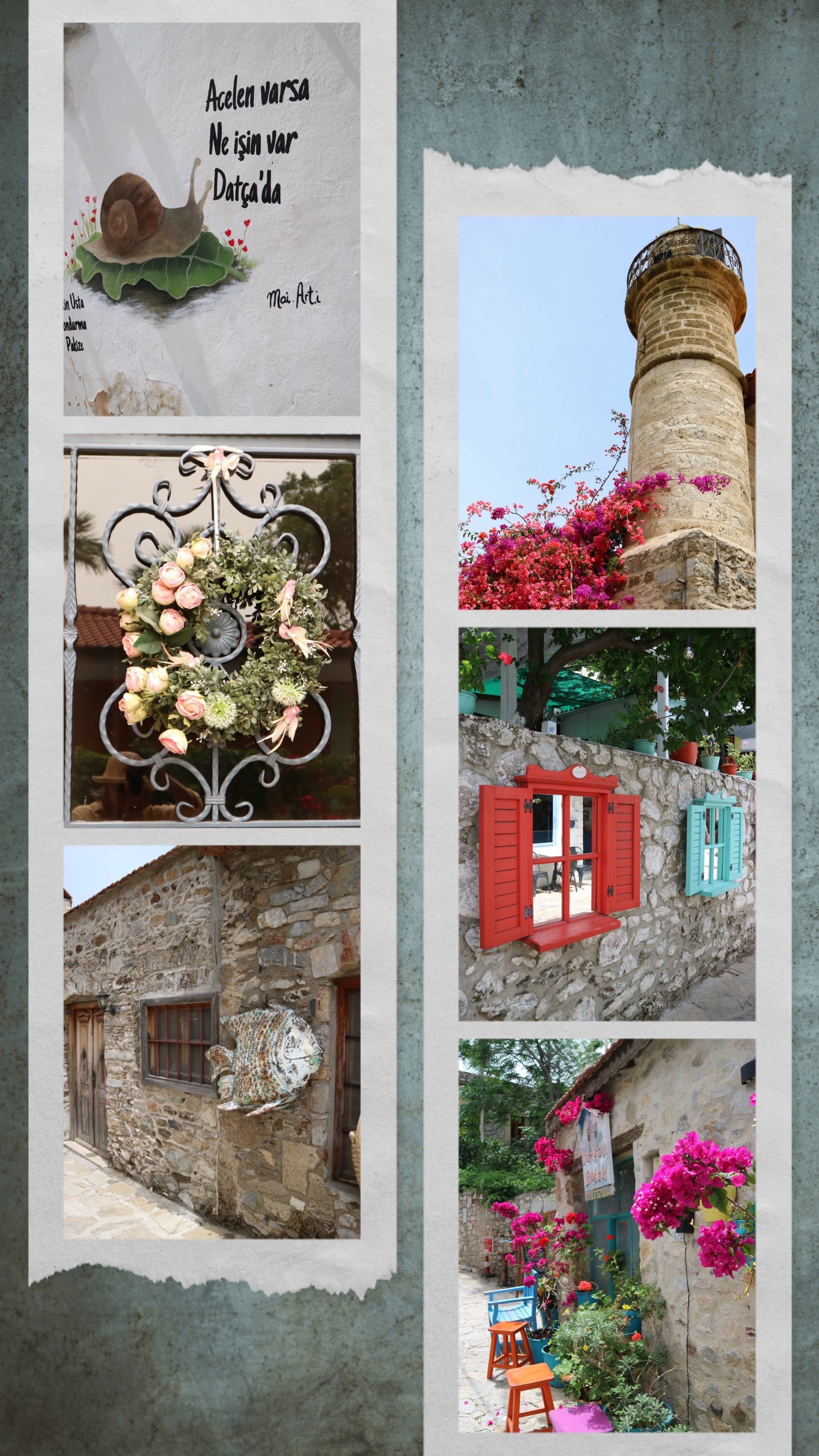
Like many ‘old towns’ rather than being a slice of living antiquity, Datça’s old town unabashedly targets tourists. The noticeable difference was the absnece of tacky shops with in-your-face hawkers selling knock offs and tenyear spices. Instead there was a chic chill vibe with cafes and local artisan shops to explore.
The street art says “If you are in a hurry what are you doing in Datça.”

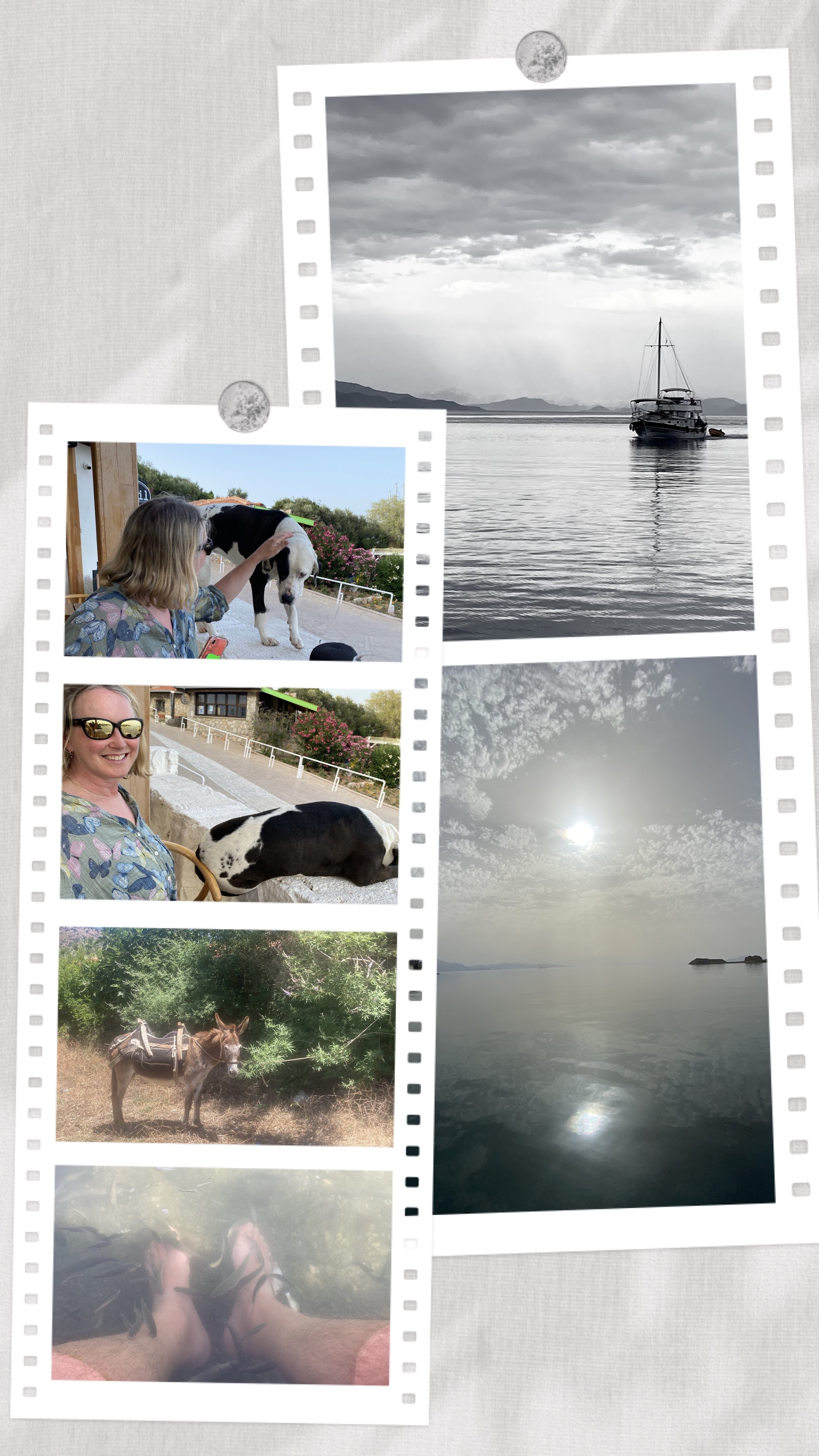
We had anchored next to the little port of Datça and near to there is a natural hot spring flows into the sea. At least it’s supposed to be a hot spring. While we were there it felt more like a tepid bath perhaps in Winter the vibe is different. These springs are open to the public (no fee) and it’s clear the locals use the amenities a fair bit. There’s a little stream between the spring and the bay where you can experience the indulgence of having your feet “cleaned” by schools of fish. While we restricted ourselves to just a pedicure some of the locals walked or floated along in the stream. I guess the last item of their to do list before leaving is to shake out their shorts. The fish aren’t small, like the ones you see in the shops that offer this back home. There were one or two that rivalled my size ten stompers. I guess they get fed well; Ian certainly provided a feast.

This gorgeous puppy belongs to the cafe. Not sure if her preferred sleeping position is a clever marketing ploy or not but it certainly had us staying for “just one more”.
The donkey belongs to a goat herder we saw wondering along the shore of one of our anchorages.

The fish pedi is not for the ticklish.
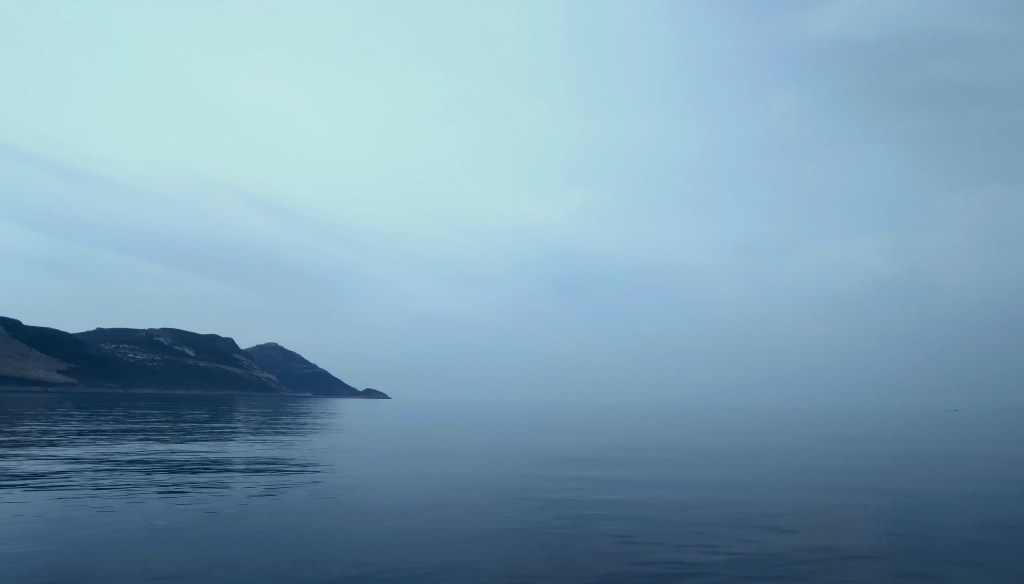
Despite there being blustery winds much of the time we were in Datça, we had some moments of surreal calm especially in the early mornings and late evenings.

Knidos, Cnidos, Kindos, or whatever you want to call it

The Ruins

As I mentioned we took a day off from Datça and sailed down to the ancient city of Knidos /Cnidos/Kindos or whatever you want to call it. This must have been an impressive sea town once, with its two bays; one dedicated to the military and the other a commercial harbour. It’s mentioned in a number of historical texts as having strategic importance throughout Greek history, including the Decelean or Ionian war in which lasted almost a lifetime. The Spartan’s campaigned in and around Anatolia during this time, often using Knidos as a port of convenience. The Spartan’s played the Greeks (Athenians), the other local Leagues such as the Carians, and Persians off against each other. Reneging on their promises and changing allegiances to suit their own designs. In 394 BCE a major sea battle occurred near Knidos between the Achaemenid Empire (Persian Empire) and the Spartan Fleet which was based at Knidos during the Corinthian War. The Achaemenid’s fleet defeated the Spartans. I wonder if instead of the Spartan king giving the job of leading his fleet to a favoured relvative called Peisander, had the Spartans had hired a Scottish actor to lead the fleet if they would have had a better outcome?

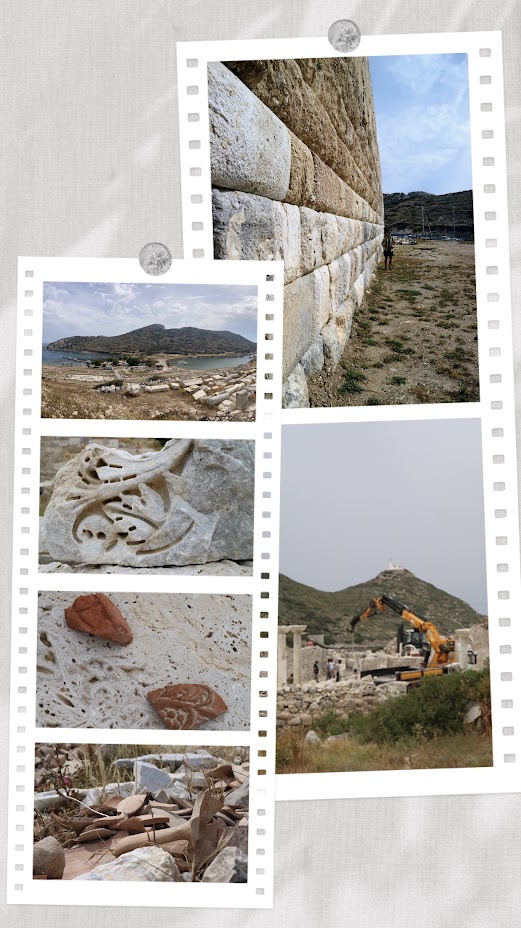
1. TOn the left is the commercial harbour and on the right is the military or trireme harbour. We anchored in the commercial harbour since we weren’t there to go pillaging and plundering.
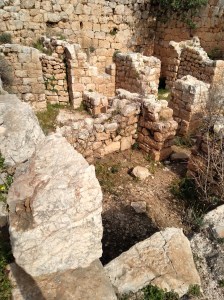
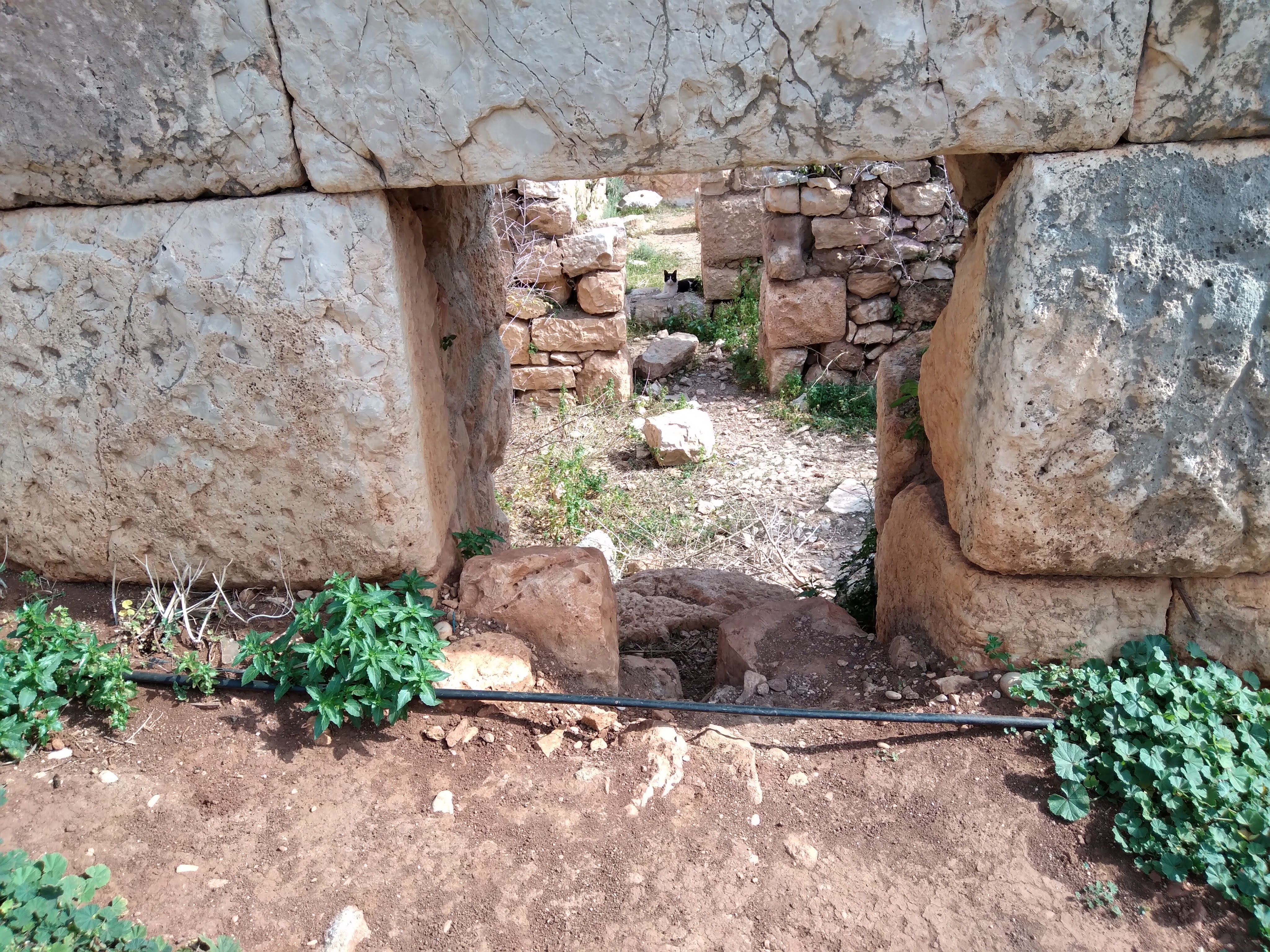
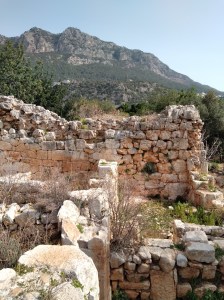
2, 3. & 4. In addition to all the temples, churches, and other buildings at many of the sites we’ve been to, there are often small artecfacts scattered about. Nowhere we’ve been has this so been as prolific as Knidos. One of the shards in the middle photo we found and returned to the front gate. The last photo is of one of the many midden heaps that can be found throughout this substantial archaelogical site.
5 & 6. Ancient vs Modern workmanship. In the top photo you can just see Ian standing next to the wall, which surrounds the Knidos theatre. The wall was built in 2 BCE by master masons and slaves. The second photo is how the modern restoration team in rebuilding the temple next door.

The Triremes

The mention of the military harbour had Ian and I both intrigued, so we did a little bit of googling. The boat of choice for all trend setting marauding forces was a trireme. You’ll probably recognise the picture below even if you don’t recognise the name “trireme”. They were most effective in the shallow waters of the Aegean Sea.

General Thucydides* outlined the specs for a trireme as having 170 oarsmen in three tiers along each side of the vessel—31 in the top tier, twenty-seven in the middle, and twenty-seven in the bottom. The boats were made of a thin shell of planks joined edge-to-edge and then stiffened by a keel and diagonal ribs. Each squared rigged trireme displaced only forty tons on an overall length of approximately 120 feet and a beam of eighteen feet. They were capable of reaching speeds greater than seven knots (13 km/hr) under sail. During battle the rowers were known to reach speeds as fast as nine knots **. The triremes were equipped bronze-clad rams, attached to the keel at or below the waterline; these were designed to pierce the light hulls of enemy warships. They could also be dismantled for transportation and/or destruction rendering them unusable for enemy forces.

According Thucydides tributes (or taxes) for trireme protection was calculated based on the following: 1 trireme = 200 rowers = ½ talent per month. A flotilla of ten triremes required an outlay of thirty talents for a typical 6-month sailing season. A talent was a unit of weight used to gold, silver and other precious goods. A trireme crew of 200 rowers was paid a talent for a month’s worth of work, which equated to 4.3 grams of silver per rower per day. According to wage rates from 377 BCE, a talent was the value of nine man-years of skilled work. This corresponds to 2340 work days or 11.1 grams of silver per worker per workday.

* Thucydides (circa 455 – 398 BCE), was an Athenian general who wrote a contemporary history of the wars between Athens and Sparta. **For comparison Longo weighs “just” 13 tons is fifty feet long and we average around six knots under sail however we’ve gone over nine knots on occasion. And I can confirm that our crew will never row her anywhere, anytime!”

The mairtime bumper cars of the ancient world!

As triremes were made of wood, they needed constant maintenance and care due to rot and damage from marine life. Tar and pitch were used as an antifouling and waterproofing coat providing protection from the harsh sea environment. Nonetheless they did not last well in open waters and were likely to succumb to extreme weather (like Meltemis). Consequently, it was regular practice to haul out the boats for extended periods even when far from home. From all of this I postulate that the triremes and their navies were the original cruisers and live aboards of the Med! I can only imagine the deck parties, BBQs, and general mayhem they would have caused to the local communities.

The Wonders No Longer there

Anyone who has ever been to the British Museum is likely to have seen an impressive sculpture known as the Lion of Knidos. This marble from which lion was carved comes from Mount Pendelikon near Athens and is the same kind that’s found in the Parthenon. That’s about 700 km away from its original home in Knidos. It’s hollow so it only weighs six tonnes, and measures 2.89 metres long and 1.82 metres high. There is a theory that it was part of a monument to commemorate the Battle of Cnidus, mentioned above. While it would make great reading in this post, it isn’t likely to be true as the British Museum estimates its age as somewhere between 200-250 BCE, some two hundred years after the battle. The rest of the monument which is still in Knidos has no definitive inscriptions to confirm the lion’s age or its purpose.

The lion was first “discovered” by Richard Popplewell Pullan (what a name!) in 1858 and he had it shipped to London (about 3,600 km away from Knidos) along with a life-sized marble statue of Demeter, the goddess of agriculture and of fertility dating to around 350 BCE. Demeter was the mother of Persephone, the Queen of the Underworld. An agreement made between Demeter and Hades, Persephone’s husband, to “share” Persephone. Under this agreement Persephone lives six months of the year with Demeter and six months with Hades. When Persephone is above ground with her Mum Demeter is happy: the sun shines, the crops crow and the birds and bees make merry. When Persephone is with her husband in the underworld, Demeter weeps and the world weeps with her. This story forms the basis of the Ancient Greek understanding of the seasons.

Another famous statue from Knidos depicted Aphrodite (only a Roman copy remains). Phryne of Thespiae, the model for this statue is said to have won against a charge of impiety, for participating in an orgy while partaking in ‘shrooms’. In support of her defence, she disrobed before the court. Her naked beauty so struck the judges that they acquitted her of all charges. I think Phryne incapsulates it all – beauty, brains, outrageousness, fun and self confidence. She’s my newest hero!

I have yet to make it to the British Musuem; these photos are all open sourced from the internet. The last one is a depiction of the Knidos Aphrodite taken from records near the time of its creation. The original was destroyed however Roman copy of this statue still exists of Phyrne as Aphrodite but it’s only a tribute.

In 2008, Datça petitioned the British Museum for the return of both the Lion and Demeter. However, I guess the British Museum responded with a heartfelt “finders’ keepers” * since both still are in the UK. I will say though that we found a shard of pottery with a geometric pattern stamped upon it and many amphorae handle shards and pieces of painted pottery that looked like plates and bowls, strewn all over the site. Being good law-abiding visitors, we left them where we found them, except the geometric patterned piece which we placed with other pieces near the entrance.

*This is meant as humour and not a statement about who should have possession of these valuable historical artefacts. That’s a conversation I would prefer to have with an English gin and tonic in one hand and a Turkish raki in the other.

Farewell Türkiye in more ways than one

We returned to Datça to sit out a bit of a blow (aka another Meltemi) watching the local turtles and stand-up paddle boarders (SUPS) battle with the frothy swell and challenging winds. On a serious note, two girls around 11 or 12 were playing near the shore which was sheltered from the twenty-five knot winds. Once they ventured a little too far out the wind caught them, and they couldn’t make headway back toward the shore. Their stricken fathers were running along a nearby headland, but they couldn’t keep pace. Thankfully, they passed near Ray’s boat, and he heard the girls screams while he was below decks. He popped his head up in time to see them disappearing out to sea. Thankfully, a quick launch of the rescue dinghy returned the girls to their family on the beach. Ray was a little unhappy that they were blissfully ignorant to the fact it was only by chance that these two girls didn’t lose their lives.

Finally, the wind abated and our time at Datça, indeed Türkiye, came to an end and on a warm summer’s day. We paid a nice man to walk our papers through the Turkish bureaucratic processes before slipping our lines and sailing the 13 nm (24 km) across the Big Blue Wobbly to Symi, in Greece. This trip took us about two hours and was completely uneventful, except for me scrambling to change our Turkish flag for the Greek flag as the Hellenic Coast Guard went by. I was going to write about Symi, our first Greek port, in this post as well, but I suspect you’ve finished your coffee and are keen to be doing more interesting stuff. So, I will say fair winds and a dearth of sea monsters until we next meet. However, for those who might recognise the name of the island – Symi, yes this is the island where Dr Mosely sadly decided to take the long way home.

We’ve been busy … now it’s time to go slow.

Hello, welcome, come aboard. Well, two months in and I’ve already broken my promise to put out a blog every month. In my defence, it’s been a big couple of months, and it’s been mostly about being with our friends. January saw us off to Edinburgh, Scotland, for the wedding of our dear friends Georgia and Tim. We tagged on to this a road trip down the east coast of the UK to visit one of my favouritest people in the world. On our return we ramped up our efforts to get Longo ready for the coming Summer. While this was happening our friends, Ray and Ali, were just beginning their grand retirement plan of buying a boat and sailing the Med. That’s right our mates decided that we were having such a blast that they decided to join us but on their own boat! Just as we were finishing up with our preparations for Summer, they found their new floating home in Malta. Since Ray and Ali are new to sailing and because we just couldn’t wait to see them again (they were at the wedding too!), we flew out to Malta to help with prep and move their boat to Cyprus.

Many of you will have heard about some of our adventures on FB, if so, feel free to put this blog up now and go about your day knowing you aren’t going to miss much here. For those of you that may not have had the benefit of Ian’s infrequent but lively updates on FB here are the highlights.

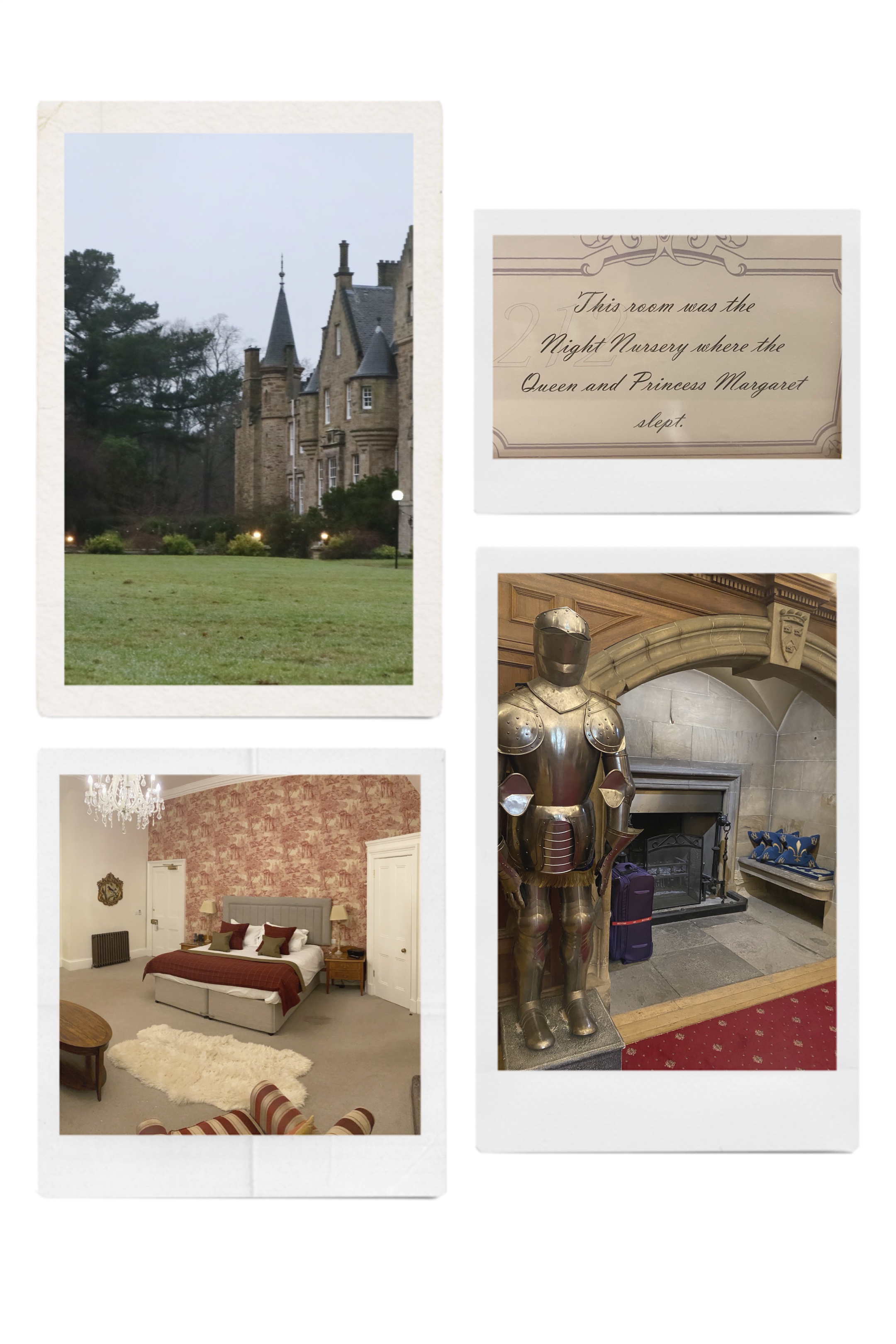
The Nuptials of Georgia and Tim Di Nardo. You know how sometimes you come across two people and think to yourself ‘these two are like G&T’s on a hot summer’s day’. Refreshing and a joy to be around in any situation. Well, that’s Georgia and Tim; the personification of G&Ts! We were genuinely chuffed to bits to receive our wedding invitation to what promised to be one of the best wedding events. Despite being true blue Aussie’s, the happy couple with the help of the incomparable Janie Rowe, Mother of the Bride, planned a very lavish affair at Carberry Towers Mansion House on the outskirts of Edinburgh, Scotland.

This is the beautiful and tranquil Carberry Towers Mansion House. Our suite was once the Night Nursery for late Queen and her sister Princess Margaret. I think this is likely the closest I will ever get to Royalty, unless you want to include being married to the Clown Prince of Pyrotechnics.

For three glorious days we helped Georgia and Tim celebrate with old and new friends. It was a wonderful time with loads of highlights, especially for me as I was asked to be back-up photographer to the extraordinarily talented Susie. It was an honour and a joy to help lay down memories for the happy couple and their families.

Meet the lovely Mr and Mrs Tim and Georgia Di Nardo. The Middle photo at the bottom is me with the lovely and very talented Susie, photographer extraordinaire

Road Trip and Visiting Coleen. The only downside to the wedding was that some of us came away with nasty colds. It was to be expected given that we had all flown in from across the world and planes are a hotbed of ickiness. Unfortunately, I was included in the inflicted and our UK adventures were curtailed as I needed a few days to recover. Thanks to the generosity of Ian and Janine of SV Deejay, we had a beautiful place in which to base ourselves in the lovely village of Seaton Delaval. So, when I was able to, we went exploring, with trips to Warkworth, Amble, Craster, a drive by of Bamburgh Castle of “the Last Kingdom” fame, Newbiggin-by-the-Sea, ST Mary’s Lighthouse (of the TV show “Vera” fame), Whitley Bay, Tynemouth, and Housestead Roman Fort. The rest of our time was spent with me cuddled up on the couch and Ian playing nurse. Thanks again to the crew from SV Deejay who provided invaluable advice on our itinerary.

Northumberland in January is a beautiful place. The clarity of the sunlight and the crispness of the air were at time breathtaking, literally as well as figuratively. The smoked fish at the Jolly Fisherman in Crasters was delish – thanks to the crew of Deejay for the wonderful tip. … And no the bridge is in Newcastle on Tyne – this is said to be the inspriation for its younger but much bigger brother/

Finally, our time in Northumberland came to an end and we drove our way down to York. York is one of my favourite UK places and I really wanted to show Ian this incredibly special town. Like most of the touristy places in the UK in January, York was quiet. This suited us perfectly. A highlight for me was the trip into the York Minster crypt. I hadn’t had time to do this before and it didn’t fail to amaze. The layers of history on this one spot are breathtaking, with Saxon and Norse ruins overlaying Roma ruins all surmounted with the years of York Minster history. We stayed only a day, but it was worth every minute.

Our next and final stop before heading back to Longo in Cyprus was to visit Coleen and her family. Ian and I first met Coleen almost twenty years ago in Saudi Arabia and despite the time between visits, Coleen will always remain one of my dearest friends. As Ian commented when Coleen and I sat down together we just picked up our last conversation like we’d only said goodbye the day before. In addition to seeing Coleen, we were lucky to meet her friend David, and to catch up with Annabelle, Coleen’s second born. We also caught up with Coleen’s folks, Madge and Peter. Along with Charlotte and Rory, Coleen’s other kids, these are people are very much part of our British family. Given my nomadic life*, Coleen’s life is breathtakingly alien and wonderful to me. Though she has travelled widely, Coleen lives in the same community she grew up in. During our day out in Robin Hoods Bay, Flylingdale and surrounds, Coleen regaled us of her youthful antics, including pointing out where she fell of her horse and dragged along the road. Surprisingly, Coleen still loves horses so much so that she teaches others to ride. No doubt saving many from her younger self’s fate. We walked the tiny lanes where Coleen, her siblings and friends played chasey. We passed by the many buildings and shops that her family had a connection to and we had lunch in the hotel where she was once a chamber maid. I even got my feet wet in the North Sea as stood watching the waves. Special thanks for the wonderful accommodation supplied by Alexander of Flylingdale School.

The lovely ladies in the large photo are Coleen and her daughter Annabelle. Coleen gifted Ian his new “going out” beanie. It is patterned in the cable used to identify Robin Hoods Bay fisherman. I had always thought that the various cable styles were just whims of the knitters but it turns out that each style represents a fishing town. When drowned sailors were washed ashore the cable knit of their jumpers was used to identify their home ports.

*Not including our adventures on Longo, I have lived in three countries, five Australian states (most of these more than once), well over eighteen towns/cities, and moved between twenty-five homes. My time on Longo is my increasing countries visited (and lived in) though my home now remains the same!

Return to Longo and the Prep for Summer. All too soon our UK adventures were over, and we returned to Cyprus to prepare Longo for our next Summer of galivanting around the Mediterranean. As part of our contract with the marina we had the opportunity to haul Longo out. Due to a wonky rudder, we hauled out in May last year in Finike and while the boat was out, we discovered it needed a bit of work including new antifouling for her hull to stop barnacles, weed and other icky stuff sticking to her butt. So, we had this done then and didn’t really need to haul out this year. However, as we had already signed the Kapraz Gate contract and the haul out was included, we weren’t about to let that this opportunity to slide (haul outs can be extremely expensive). Besides, we are in marina surrounded by cow paddocks what else were we going to do for that week?

The hard (slang for a boat stored on hardstands in the yard) in Cyprus is big until you look at the size of the crane and realise its turning circle is really big! So, the hard can only accommodate around ten or fifteen boats consequently, there is a cue of people eager to get work done and only so much space available. We asked to be lifted mid-February but were told many projects were running overtime and a que was forming. So we were surprised when we got a call around 1100 to say that they had space and could haul us out at 1330 the same day! We scrambled to get prepared, it wasn’t pretty, our bed became a soft place for all the odds and sods, like the TV, that would normally go in a safe place when underway. While I was doing that, Ian was preparing the boat above. Unfortunately for him this included a quick dip in the chilly water to take of the plastic bag that protects our prop from unwanted barnacle growth over winter. Ian managed the job in one lung full of air, impressive (but given his adventures later Ray and Ali’s boat not really that impressive), however he also came up trailing blood. He had managed to slice open his finger in the process. It was nasty enough that it left a trail of blood through the cockpit and stole the words from his mouth for a while, just as well as he was shivering so much had he tried to swear he would have surely bitten his tongue.

Finally, the boat was ready, and we let loose the lines. Every sailor loves to lose the line but when you’re only going 500 metres under engine it takes the fun out of it. Still in such a small time I managed to slip down the companionway and jar my shoulder and hip. Between Ian’s finger and my shoulder not an auspicious start, especially as we knew there was plenty of work ahead.
It’s always a bit of a nervous moment when you give your boat-home over to someone to lift out of the water. However, the team here were very professional and their calm assuredness eased my worries a good deal. There was a little bit of tension on the sidelines when the boat owners ahead of us in the cue came by to query why we were being lifted before them; a perfectly reasonable question given they were before us in the cue. The marina staff explained that as we plan to do the work ourselves, with almost no practical assistance from the yard, it was, in the marina’s opinion, an easy solution to pull us out and let us crack on while their teams were working on other jobs. It pays to be nice to the gatekeeper!

Once the boat was out, the first job is to power wash the hull. This is the only job we can’t do ourselves. During the sailing season Ian maintains the hull by free diving down and scrapping the hull to remove any unwanted growth. The antifouling paint we had put on in May making this an easy job and sailing itself does a lot since a “sailing boat gathers no barnacles”. It would be nice if the antifoul and sailing stopped all the growth but unfortunately some barnacles and weed growth is inevitable especially over winter when Longo isn’t sailing. The power wash is brutal, and we stood by as the entire topcoat of antifoul sloughed away along with the weed and slime. Never mind we planned to repaint anyway.

Once she was clean the crane moved her into her new home for the next few days. The marina here is a little more professional than the last haul out we had. Before we had rough logs and wedges holding her up. This time we have sturdy adjustable steal stands that are tied together for added security. Just as well we had forecasts for a bit of wind and a storm coming our way.

Last time we stayed in an Airbnb while Longo was on the hard, this time we stayed on board. It has its challenges. We don’t have shore power; we could have but Ian has already installed our new kick ass inverter, so we still have coffee and toast. We don’t have water other than what is in our tanks, and we can’t just let that go down the drain since that would just be splashing on the concrete below. Still, we are standing only metres from the door to the marina facilities, so we took advantage by taking long hot showers.
By the end of the haul out day, Ian had polished one side of the hull (above the water line), and I had made a start on cleaning the pesky waterline where the antifoul ends and the water laps against the white gel coat. The next day, we were up early and began the boring task of sanding the hull ready for the new coat of antifoul. We had to do this by hand as machine sanders are too aggressive. We also had to scrape of any barnacles that the power wash missed, for example in the bow thruster tunnel. As we had been expecting to do this job for some time we had already bought throw away overalls. These are a great invention and I thoroughly recommend them. I also recommend you wear them … which we did not! And we looked like a pair of 6’ blue smurfs. Working together we knocked over the sanding quickly and moved straight on to painting.

It took us two hours to paint one coat of the hull. The good thing about this kind of painting is that it needs to be even but otherwise it doesn’t really need to be pretty. Just as well, I’ve been told I lack the skills required to do a spiffy paint job. (I’m not heartbroken by this at all! It just means I don’t help if it needs to be pretty). Ian did the high line, and I took care of the underneath. Having over 13 tons of boat over my head gave me pause for a moment and then I just cracked on and did the job. I was surprised that it only takes just over one can of paint to do one coat of the boat. Throughout the day the marina painters would pop over to offer advice and let us know we are doing an excellent job. Ian was a little surprised with the ease of the work so naturally decided that instead of the two coats we had planned we might as well do three. Yay!

A few days later we had finished all our jobs, and it was time for Longo to go back into the water and back to her Winter berth. Just as well because Ali and Ray were hot on the heals of their perfect floating home and we had just enough time to finish up most of our summer season prep before we got the call to say they were heading to Malta to look at a very promising boat called “Chill”.

Captain Smurf tells me he will always wear his PPE in the future and that’s me (wearing my PPE) painting the underside of the keel, it’s the last job to be done before Longo returns to the water. At this point she is in the strops of the crane.

The beginning of Ray and Ali’s Big adventures on Chill. It turned out Chill, a 45’ Benetaeu Oceanis, was exactly what they wanted and as they signed a contract, we made plans to go to Malta to help them prepare the boat and then sail it closer to where we had Longo as we plan to buddy boating through Turkey, Greece, Albania, Croatia and then on to Montenegro for Winter.

Before we could leave Malta, Ray and Ali had to provision and equip the boat for the season. Ian had loads of fun in the chandlery spending Ray’s money, quipping every few minutes ‘you’ll need this and three of those and…My friend will pay!’ whenever the staff walked by. Funnily enough the chandlery gave them shopping-beer and invited them back. Now if I can only find a friend with an open wallet and a dress shop that serves champagne.

We didn’t get much time to explore Malta, but we loved what we saw and have plans to go back at some point in the future. However, we did manage to catch up with friends from Finike, Kerry and Stephen of SV Sailing with Thankfulness. They’ve been in Malta at anchor for some months undertaking repairs and preparation in readiness for their Atlantic crossing. It was an unexpected delight and their joy and enthusiasm for Ray and Ali’s burgeoning adventures was infectious.

The next morning, we threw the lines and headed for Milos, Greece. With plans to travel on to Rhodes before crossing to Cyprus. A multi-night passage is a wonderful way to get to know your boat and gain your sea legs (poor Ali had a nasty case of sea sickness to battle through) and this trip brought back memories of our first trip from France to Sardinia.

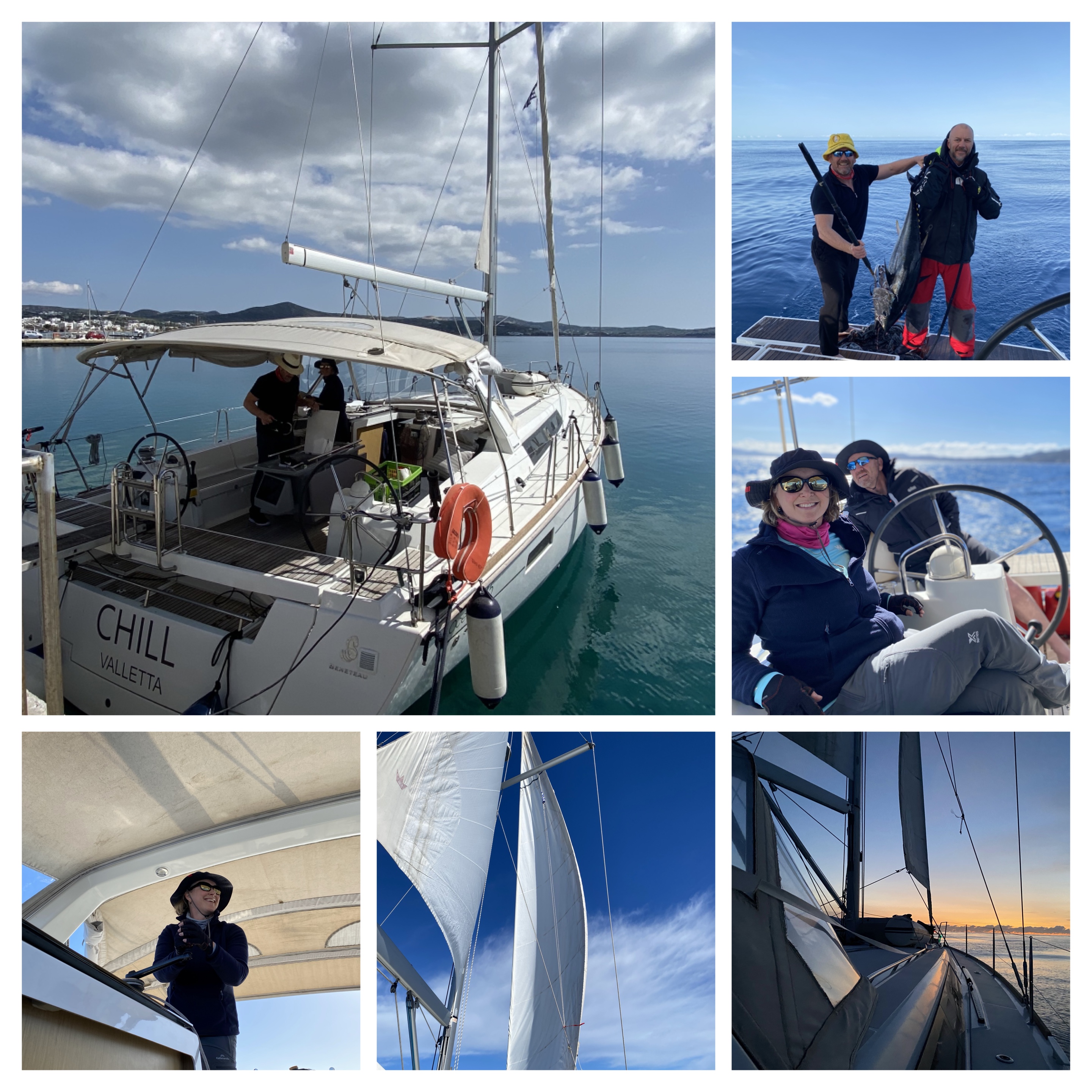
Meet the crew of Chill, Ray and Ali, they will be appearing in many of our future posts as we will be buddy boating for the season. Chill is a Beneteau Oceanis 45, so yes our Longo is a bit bigger, so I think I will take to calling Chill our Little sister. (not that we’re competitve or anything)

Our first stop was Milos in Greece. An island that Ian and I have ambivalent memories of, as we sheltered in one of its bays for five days during our first Meltemi (strong northerly winds). This time we would be stopping at the town quay, and everything was going smoothly until it became a bit blowy. That’s when the harbor master offered to move us into the small, sheltered fishing harbour alongside the quay. He assured us there was sufficient depth to cater for Chill’s 2.3 metre depth. On arrival Ray and Ian were cautious and backed in slowly despite the Harbor Master and his cronies making twits of themselves hollering for us to ‘come back more, no problem’. However, there was a problem and the bottom of the rudder hit the harbour floor. At this point, the Harbor Master and his mates all melted away and left us (or more correctly Ray) to survey the damage. Thankfully, Ray and Ian’s conservative approach meant there was nothing more than a cosmetic scratch.

Milos continued to deliver, with the guys and the Harbour Master playing a game of Uno with shore power (a box on the town quay or pontoon that delivers AC power to the boat while in port).

Round 1: Our new shore power cable had the wrong size plug, so the marina gave us an adapter.

Round 2: Uno Reverso – The loaner-adapter was ‘homemade’, and the active/neutral wires were crossed so we had a warning light on the boat. This increases the risk of fire and the tingly dance.

Round 3: Uno Reverso multi-meter and screwdriver – We diagnosed the problem with the multi-meter and wired it correctly to standard convention.

Round 4: Uno Reverso new shore power box – When we moved to the new berth inside the fishing boat harbour and connected our correctly wired cable and adapter to a new shore power box but the warning light came back on. The shore power box was incorrectly wired.

Round 5: Uno Reverso screwdriver – So we re-crossed the neural and active wires on the adapter to correct the incorrectly wired shore power box.

There’ll be no tingly dancing on our boat!

They say bad things come in threes, and this was definitely the case In Milos! The day before leaving we arranged to refuel the boat. Without going into too much detail, let’s just say Ray ended up paying for 209 litres of diesel despite the tank only being able to hold 180 litres and being quarter to a third full. Our advice: always watch the operator zero the gauge, get a receipt and don’t be worried about calling the port police in to help.

The next leg of the journey, Milos to Rhodes, was reasonably uneventful except for Ray catching a mammoth tuna. It was big enough to feed an army and took both Ray and Ian to successfully land it on the boat. Ian is particularly chagrined as he’s been trying to catch a fish in the Med since we arrived, and Ray caught a massive Tuna on his first day out. I was simply happy to be eating sashimi tuna as it was being sliced off the bone.

Rhodes was a pitstop and not much more. Ali and I reprovisioned at the local Lidl laughing at our sea legs on land which made walking and reading Greek challenging. The next day we set off for the longest leg of the trip with the proposed destination being Cyprus. Unfortunately, the sea got a little wobbly with a confused following swell. At the same time Ray and I were suffering from a nasty head cold and Ali’s seasickness returned. Ian as always, the bestest captain and crewmate, managed to keep us on course, fed, watered and took on all the galley duties. Then, when about three quarters of the way to Cyprus we suffered a couple of electrical problems which caused us to divert to Alanya (Turkey). Notwithstanding our issues the Harbour Master wouldn’t allow us to check in to Turkey through his port as Chill’ was travelling on a provisional Polish registration (the official registration is due to arrive in Turkey in a week or so). Instead, the Harbour Master allowed us to take on fuel and told we could anchor for a brief time to rest before moving on. Our electrical issues included a fault with our depth gauge, so anchoring in an unknown bay was not a viable option. Consequently, we had to turn around as the weather window to Cyprus was closing. We hoped to check in at Finike (the next town along) where Ian and I had a contact who we thought could help us. However, the same Harbour Master manages Finike so we had to continue for another night further north to Kas where they would allow entry on the provisional registration for a “small administrative fee”.

By now the crew were all tired and looking forward to an easier passage with the destination that included a stable berth, hot showers that didn’t wobble, help with the electrical issues, a chance to do a load of washing and walk on solid ground for more than an afternoon. Of course, that was still away off and our final difficulty is best described by the hero of the moment, Ian:

Snuggled in the cockpit wearing three layers of clothing under our full foul weather gear to keep warm we started to feel the unmistakable vibration of a fouled prop. It turned out to be a large piece of tightly wrapped plastic. Of course, this only happens when it’s a dark night, cold and in the middle to the ocean. It took a few deep breaths before committing to going over the side. Thanks Janine and Craig of SV Inelsamo for the great tip to tie a rope under the boat to hold onto. It would have been a bit untidy to drift from the boat at night wearing a dark wetsuit.

Here’s what it looked like alone in the dark with faithful Mr Stabby hacking into plastic while the boat was banging up and down on my head. (Ian made an artistic representation of his view while under Chill, however, you can achieve the same thing if you turn the lights out and close your eyes!

Ian came up with two dark patches of antifoul on his head where he met underside of the boat and an overwhelming tiredness. Thankfully Ali is a doctor, and, on her advice, we fed him up like you would a recovering marathon runner (I will always keep lollies on my boat for emergencies) and put him to bed. Thankfully, the rest of the trip was easier and when we finally docked in Kas after clearing customs, we all breathed a sigh of relief.

Ali and I took the opportunity to celebrate her sea legs in Milos. The marina shown here is Kas, where we left Chill to return home (more on that below) and you can see Ali, top left, still smiling when we finally reached Kas.

This trip in total was a lazy 1024nm first sail of the season for us and first ever sail for Ali and Ray. Ian and I are grateful that Ray and Ali have not taken this eventful first sail too much to heart and are still looking forward to a wonderful summer sailing with us.

Not long after arriving at Kas, Ian and I hopped on a bus to Antalya where we caught a plane back to Cyprus. Three days later he and I set out in Longo for Turkey. We’re currently on day four of this adventure holed up in an anchorage waiting for some nasty wind to die down so we can finish our trip Fethiye, where we will meet up with Ray and Ali on SV Chill. Fethiye will mark the true beginning of our season with the arrival of Ned, who is stopping by for ten days or so on his way to Copenhagen for a conference.

We hope the last few months have been kind to you and the next holds fairs winds (surely, we are due for some?) and a dearth of sea monsters (unless they are monster tunas).

Winter in Neverland

Hello, welcome, come aboard and most importantly Merry Christmas and Happy New Year! We hope 2023 and the festive season has been kind to you. I know I am month or two late, what can I say I’m a slack tart.

Our 2023 sailing season has been over for quite a while, and we’ve been well and truly bedded down for the colder months. Winter is a different kind life, tucked away in our marina berth in Cyprus. We’ve been here a while and I had intended to begin putting together more blogs about our adventures long before now. Alas, I succumbed to the doona’s call, and it’s taken me a little while to regain my groove. There was also a trip to see friends in the UK so it’s not all due to my being slack and idle. I guess a reset period was to be expected as we covered a lot of ground last year. The good news is my creativity light began flashing recently and I’m happy to be back at my “writing desk”. Thanks to those who have asked for more and apologies for it taking so long. Before I begin with what we did for the second part of the 2023 sailing season, let me tell you about our Winter home.

The island of Cyprus lies forty miles of the Turkish Coast and 480 miles from mainland Greece. The trip to Cyprus was about as unadventurous as you can get and still be on a sailboat. We left late in the day from the tiny Greek Island of Megisiti (Kostellorizo), which is just 2.1 nautical miles off the coastal town of Kos in Türkiye. It took us about 36 hours to travel the 230 nautical miles to Cyprus. Of that we sailed for about half an hour and had the sails up for about an hour hoping for wind which never came. They don’t call it the Med (Motor Every Day) for nothing! It was without doubt the most uneventful passage we have experienced. The highlights were floating through an eerie moonlit, oil slick smooth ocean, glorious sunsets, sun and moon rises, and the moment of excitement when we passed a mammoth bait ball. I have no photos of the fish as it was a scramble to turn the boat around and cast the lines out. Surely this was the moment when Ian would catch a fish. We passed through the bait ball three times and Ian stands by his claim that his inability to hook a fish is because there are no fish in the Med.

The one benefit of a no-sail sail is I had the chance to capture the changing sea and sky. The two photos on the right are the moon. The bottom right photo is unedited and gives you an idea on just how calm and smooth the trip was, especially on our second night.

We arrived here in Cyprus in November, and we have subsequently developed mixed feeling about our decision to call this home for Winter 23/24. The marina is in Northern Cyprus and on a cloudless day you can see Türkiye across the water. The facilities are the best we’ve experienced and while some of the marina rules and the culture are at times incomprehensible, it’s certainly entertaining. Wearing flippers in the pool is forbotten even if you are the only one in the pool. And please don’t ask for a glass of tap water in the restaurant, safety dictates that this is also forbotten. The marina bar’s 5-8 happy ”hour” (two-for-one) every day is a bonus we are trying not to abuse.

None of this should really be a concern since we intended to focus on boat projects over the cooler months. Our main project being the installation of an inverter which will give us AC power for hot water on demand while at anchor (hallelujah!), a microwave and might extend to me being able to occasionally blow dry my hair; it’s the simple pleasures that matter. We’re also installing a diesel heater for future winters. However, the isolation of the marina and the limited shops here are proving to be an under-estimated challenge. Ian can’t even buy stainless bolts, so our recent trip to Scotland for a friend’s wedding became a boat job shopping trip as well. Hopefully more on this trip will follow in a future post.

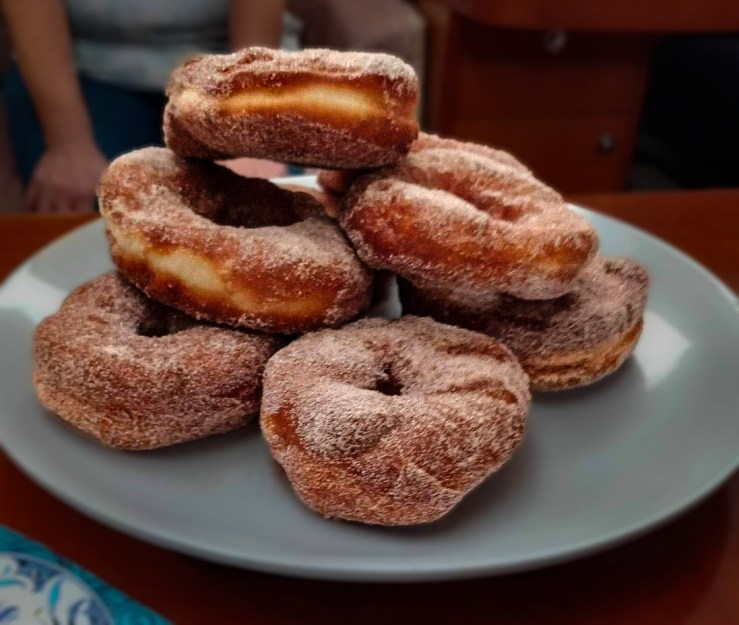
The upside of this marina is the lively live-aboard community. Many of our old friends are here and unsurprisingly we’ve found it easy to meet new people since Ian has been refining his doughnut making technique. Between, the exercise group, craft, movie nights, doughnut mornings and drinks at the bar we are keeping busy. We are also exploring this “Neverland” when we can, thanks to friends with a car and a willingness to include us in their adventures.

I couldn’t resist sharing this photo of Ian’s Doughnut achievements. They’re a huge hit with our friends; we especially enjoy the chatter and laughter on the boat – it makes any gloomy week a little bit brighter.

Our adventures here have certainly offered us a unique perspective on how political and international relationship issues impact on day-to-day life here in Cyprus. Due to it’s rich Copper deposits, throughout history the Assyrians, the Egyptians, the Persians, the Romans, the Byzantine, Lusignan, Genoese, Venetian, Ottomans and finally the British, have all had a shot at ruling this tiny island. The population is Greek Cypriot in the South and Turkish Cypriot in the North. The Turkish Cypriots are the minority. Both consider themselves “Cypriots” but if you ask a Greek Cypriot if a Turkish Cypriot is a “Cypriot”, the answer will be a resounding “no”. However, the same does not necessarily apply in the reverse.

How did this duality of patriotism occur? As I mentioned the island has always been a prize for one Empire or another. The most recent dispute began prior to World War I. At about that time, Cyprus was part of Türkiye however the Sultan asked the British to take care of the day-to-day management of the island. During this time there was a large Turkish presence, though most of the population consisted of Greek Cypriots with a flourishing British Expat community. When Türkiye and Britain found themselves on opposing sides of the war, the Brits retained control of the island. When Greece changed their allegiances to that of the allies, many more Greek immigrants came to Cyprus seeking a haven from the war. Throughout this period the Greek Cypriots began calling for Enosis, which refers to a formal union between Cyprus and Greece.

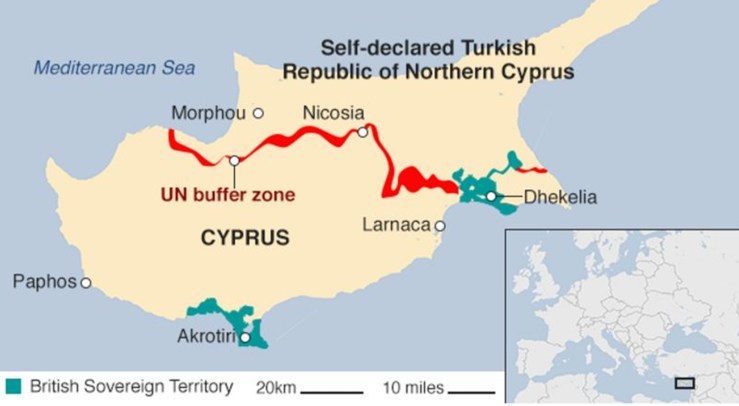
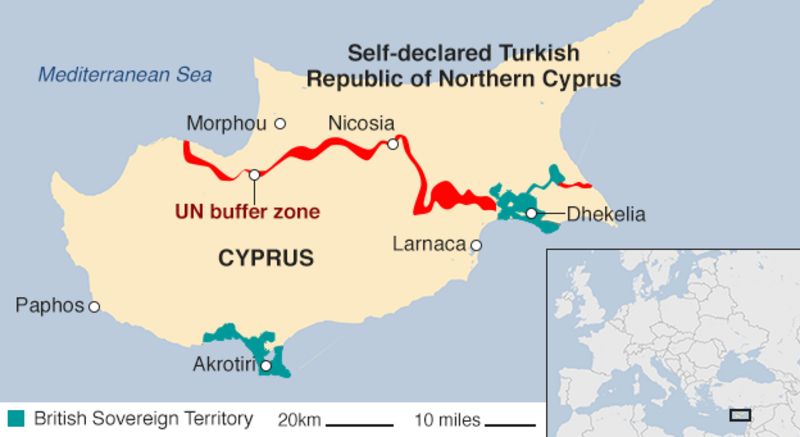
As I’ve written before, the Greeks and Turks aren’t exactly the best of neighbours. Over the years there have been varying levels of unrest along their border. In recent years, no place has seen more rioting, bombings and assassinations than Cyprus. In essence, Türkiye said if you can’t play together nicely you’re going to have a time out. The Turkish Army invaded and annexed the north of Cyprus. Greeks living in the north were ‘removed’ and it was untenable for Turks to remain living in the south. A truce of sorts was reached in 1964 at which time the “Green Line” (demilitarized zone) was established. This is controlled by a UN Peacekeeping Force which is charged with separating the Republic of Cyprus in the South (Greek – I’ll call this Cyprus for the sake of this blog) and the unrecognized Turkish Republic of Northern Cyprus (which I will call TRNC). The Green Line is 180 kilometres long and passes through the Cyprus/TRNC capital of Nicosia. The Green Line’s width varies from less than 20 metres to more than seven kilometres.

We are located roughly where the “ish” in Turkish is located on this map. It takes around two hours to drive to Nicosia. Image courtesy of https://ichef.bbci.co.uk/news/

The Brits and the United Nations have tried many times to mediate a solution between the Greek and Turkish Cypriots, however these efforts have been unsuccessful. Reunification is gaining popularity again as both Cypriot governments are keen to join the European Union and reunification is a precondition to this occurring.

From a historical perspective I can understand both sides of the story. For the locals, they fear the erosion of their beliefs and way of life. The sides have opposing foundations in language, religion, education, health, and governance. So, reunification will not be an easy path. In the meantime, people continue to live their lives as best they can, and we do too.

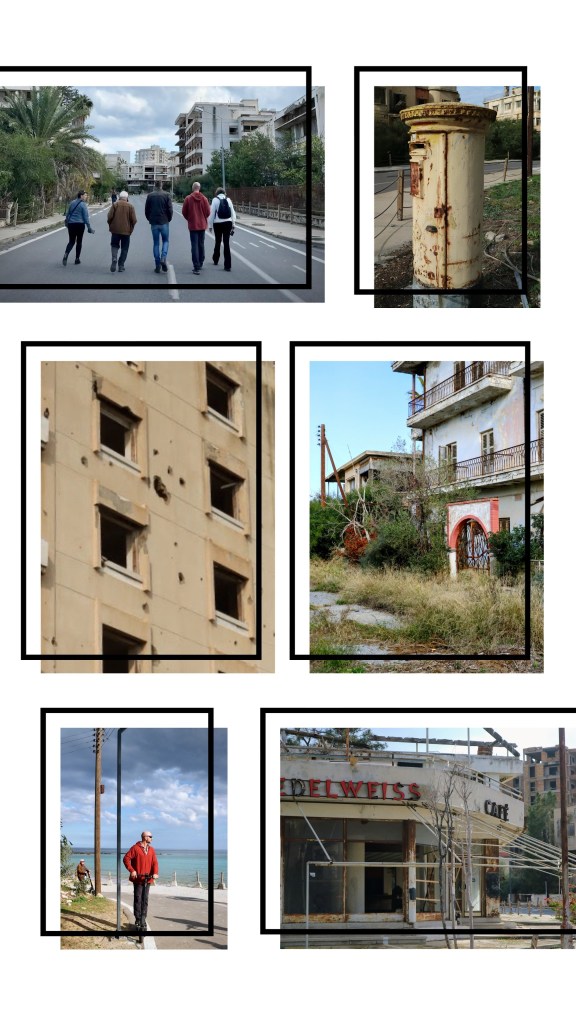
We recently had the opportunity to visit the Famagusta/Gazimağusa (Greek/Turkish names) ghost suburb of Varosha. This suburb has been uninhabited since the second phase of the Turkish invasion of Cyprus took place in 1974. Turkish tanks overran the surrounding plain and Turkish planes bombed the town. Most of the Greek and British population escaped however the invasion resulted in dozens of deaths. After taking the town, Turkish forces fenced off Varosha and it has remained vacant until recently when TRNC reopened areas to the public.

Along with our friends from SV Deejay and SV Matabele we hired electric scooters to tour the area. It was a surreal experience, though it lacked the melancholic atmosphere of the ghost town of Kayaköy which I’ve written about before. Perhaps it was the electric scooters, or the modernity of the derelict buildings, the presence of a UN office and Turkish posts, the proximity to busy streets and thriving businesses and the stop for a beer at the café by the beach that eased the air? Nonetheless it was a joyless place, especially when you consider that folk who once lived there have returned to find their homes looted and now crumbling into dust. I admit my heart hurt when I realised the pock marks in one or two of the buildings were signs of the battle and represented the loss of life that must have occurred not that long ago.

On a lighter note, some of your ears may have pricked up when I mentioned hiring electric scooters. Yes, Ian rode a scooter. He tested its speed and manoeuvrability without losing teeth or too much of his dignity.

Varosha was “described as the “hub of art and intellectual activity” and “the French Riveria of Cyprus”. Celebrities including Richard Burton, Elizabeth Taylor, and Brigitte Bardot are said to have visited the area in its heyday. (https://www.businessinsider.com)
For the readers: There are numerous books written about the troubles in Cyprus. I am currently reading “Bitter Lemons” by Lawrence Durrell, which is exceptionally good. There is also “The Sunrise” by Vicotria Hislop which is based in Varosha.
Thank you Lorna of SV Matabele for the first picture.

Given the embargo most countries and the UN have placed on TRNC, this side of the Green Line is something of a Neverland. It is however a haven for folk from countries that are not currently part of the “in-crowd”. Vodka is easy to find if you catch my drift. Having said that there is also an active British Expat community taking advantage of the weather and favourable exchange rate. The influx of international residents and a more liberal approach to religious doctrine means that we are enjoying a plenitude of one of my favourite things in the world – bacon!

Modern TRNC is a place of contrast. Flashy new apartments and houses are going up alongside partly finished and crumbling buildings; there is a very new and impressive restaurant at the entrance to Varosha. This is not that disimilar to Türkiye and many of the Greek islands we have visited. Aside from Gazimağusa and the Capital of Nicosia there is only one other significant town on this side of the Green Line. HOwever, there are many private universities, and flashy international medical facilities – dentists and IVF clinics are popular. Despite the global unwillingness to acknowledge this side of the border, tourism is a large part of the economy with dozens of hotels and resorts dotted along the coast and in the towns. Many include casinos and, going by the high-end cars we see driving around, there is money to support them.

Yet … and yet … it’s nothing unusual to see a goat herder tending his flock on a roundabout or a farmer on his ancient tractor trundling through the village. Mounds of rubble and rubbish abound everywhere as do the ubiquitous stray but well cared for cats and dogs. The people are patriotic. Northern Cypriot and Turkish flags are flown everywhere. Atatürk statues and portraits are plentiful. The road signs and maps sport both Turkish and Greek names. In fact, people are comfortable with using these names interchangeably without any disgruntlement. Religion is lowkey. Mosques are favoured this side of the Green Line; however, we’ve seen well-kept churches and at least one monastery/church with a healthy patronage.

There are some oddities here which are due to the international embargo placed on this side of the Green Line. iPhone maps won’t provide directions yet, for some reason, Google Maps works just fine. Local bureaucracy and cost make it exceedingly difficult to receive anything shipped from overseas with import duties as much as 150%. To get around this, there’s an active “safe hands” protocol for getting goods and mail in and out of the country.

Travel between North/South Cyprus is complicated. Going South doesn’t present any problems, TRNC are happy to “stamp you in and out” of the country. At the airport recently, customs asked if wanted a stamp in our passport. We answered “no, thank you” as it can cause issues when travelling through other countries, particularly Greece. No Surprise there! Conversely, as the Greek Cypriots do not recognize North Cyprus, they won’t stamp you out of Cyprus, if you are passing into TRNC territory. This results in the records showing you never left and consequently have overstayed on your visa. And don’t even think about sailing from TRNC to Cyprus! Stories abound of the Greek Cypriot Coast Guard turning boats away or confiscating boats that persist. This is not a problem if you never intend to return to Cyprus, but we’d rather not burn any bridges. So, we will check out and head straight back to Turkey and leave Cyprus (the Greek side) for another time.

Despite the politics of living in ‘contested, or occupied, territory’ the locals have been very friendly. They face the same issues we do regarding travelling and obtaining goods etc. Most people speak English and are happy to help us work on our Turkish. Just like the Turkish mainland, crime is almost non-existent. We will have to adapt our ways when we return to a western community and to return to locking up our belongings. In the meantime, we are attempting to make the most of our time here while trying hard to look past the inconvenience of living in Neverland. Unfortunately, this hasn’t extended to Ian embracing a Peter Pan wardrobe of green tights and a jaunty hat. Something I’m sure we would all like to see!

Until next time fair winds, and a dearth of sea monster for the days ahead.

The Many Gods of Istanbul (Part II of Istanbul)

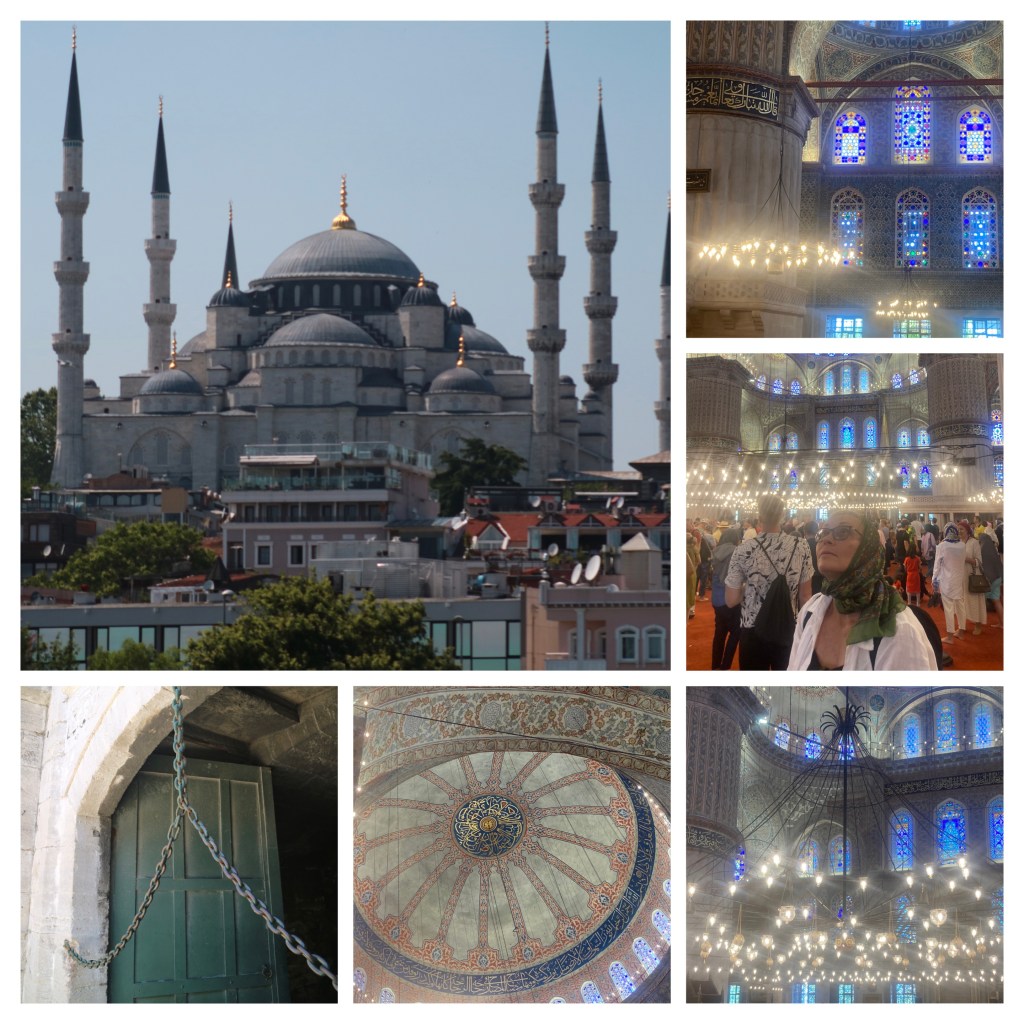
Hello, welcome, come aboard. Part II of our adventures in Istanbul. Unlike most of our adventures, where we just charge in like a bull at the gate, we decided to begin our stay in Istanbul by doing a guided tour. We knew there is was much to see and many friends had given us advice. However, we thought that supplementing this with a walking tour with a local, designed to orientate new visitors, would enhance our exploration of this rich exotic city. We were guided through the old town precinct, viewing all the important sites: The Hagia Sofia, Sultan Ahmet Camii (also known as the Blue Mosque), the Basilica Cistern etc without stopping to enter them or to really take in their outwardly beauty. Instead, we made notes about the best times to visit those that interested us, which ones to miss and other tips that would make our explorations easier. We will do this again and thoroughly recommend it to anyone travelling to “big” locations.

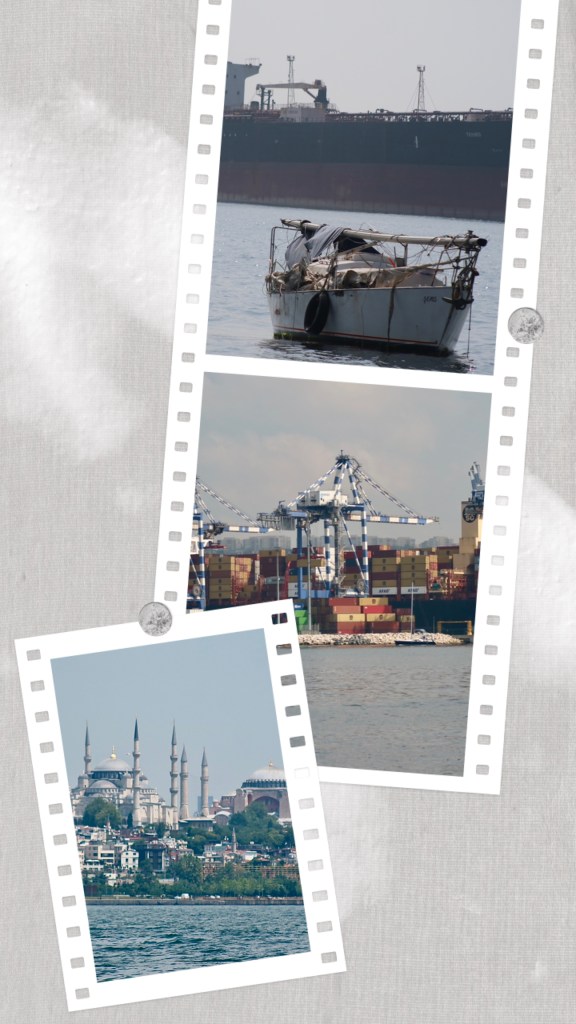
In the afternoon we boarded a ferry for a tour of the Bosphorus Straits and Golden Horn. It’s possible sail along the Bospherous (motoring only) all the way into the Black Sea. The likelihood of a “next time” in Istanbul with Longo is very slim, and doing this trip would add another sea to our list, but we decided that the trip through one of the worlds busiest waterways was something we would put on the “maybe next time” list. We’re learning that while we have all the time in the world, there will always be choices to be made between this or that adventure.

Having found the lay of land, we planned our assault on Istanbul, we took time to first explore Kadiköy (see Part I). Then the following day we set off early to hit to the big attractions. The history of most of these is well known and well documented so I won’t bore you with the usual historical data, instead here are some quirky and lesser known facts and our personal observations.

To add a little spice to our experience we found ourselves in a city of pilgrimage during Eid al-Adha. A time when many Muslims, Turkish and tourists alike, travel to Istanbul to worship at the Hagia Sophia and Blue Mosque. Erdogan, the recently re-elected Turkish President, extended the holiday period so many locals had extra time on their hands and it seemed they all decided Istanbul was the place to be. At times this increase in population was daunting, intrusive and downright over powering but our guide had set us up well for success.

In the background beneath the trees is the line to entered Hagia Sophia! Thankfully, our guide advised us to arrive in early and missed most of the crowds.

Hagia Sophia: A church turned into a mosque turned into a museum returned to a mosque. The name means “Holy Wisdom” and it was completed in 537 AD. Amazingly, the architect knew the area was prone to earthquakes and designed this mammoth stone domed building to withstand them. It has survived many earthquakes the largest coming in at over 7 on the Richter scale. Having survived these earthquakes undamaged, in the 9 CE vikings left their mark on the building in the form of carved graffiti on columns in the southern gallery. Unfortunately this no longer open to visitors but I love the impropriety of these bored men. The graffiti reads “Halfdan was here” and “Ari made these runes.” These men were likely members of the Varangian Guard in Constantinople.

Courtesy of Viking Archaeology

I had great hopes for the beauty and spiritual vibe of the Hagia Sophia. After all it has Islamic and Christian history. Thousands have payed within these hallowed walls. “God’s” presence should be strong here. It is certainly beautiful, especially the enormous low hanging candelabras. The lights have a golden glow that lends the cavernous space an intimate air. I imagine the building could be peaceful and in quiet times imbue a feeling of spiritual calmness. There were many visitors (Muslim and Christian) who obviously felt this way. I envy their faith, which must lay the foundation for their experience because I never felt any of this. This lack of emotion had little to do with the Hagia Sophia being a mosque rather than a church. I am an agnostic. I don’t care what flavour the Devine comes in and how folk choose to worship (so long as it’s not an excuse for base emotions such as hate, envy and superiority). Many religious buildings fill me with awe and wonder. They are expressions of devotion which I feel in my own way. I just didn’t get any profound sense of well being from the Hagia Sophia, it was “just” a pretty but busy building.

Hagia Sophia.

Sultanahmet Camii: (The Blue Mosque) (1609-1616) Sultanahmet’s Mosque is popularly known as the Blue Mosque due to its stunning tile mosaics. The blue mosaics are beautiful however I was taken by the striking red boarder designs. I found this mosque held all the soothing hush that I have come to love from religious buildings, perhaps because we entered just after Dhuhr (midday prayers) and the crowds were smaller.

The architect Sedefkar Mehmet Ağa, an Albanian was brought to Constantinople as part of the “child levy” or “blood tax”. Thıs was a form conscription practised by the Ottomans. In addition to the beautiful tiles, the Mosque was the 2nd Mosque to have six minarets. Ka’aba in Mecca being the first, and the holiest, in Islam. The story goes that Sedefkar misheard the Sultan’s request for “altin minareler” (gold minarets) as “alti minare” (six minarets). Folks were not fooled by this and were a tad miffed by the Sultan’s presumption that he could have a mosque that rivalled Ka’aba. To prevent a coup or revolution the Sultan had another minaret built at Ka’aba. There are now a number of other mosques with six minarets in the world. One of the most recent is being built by the current president of Türkiye on the Eastern shore of Istanbul. This new mosque was mentioned by a number of locals we spoke to; all of whom seemed to be embarrassed and apologetic for the avarice of ther current leader or as Ian’s fireworks dealer called him “our new Sultan”.

The Blue Mosque is a glorious expression of devotion or for the cynics out there a magnificent example of avarice (the people paid through taxes to ensure the Sultan’s devotion to Allah was displayed for all the world to see). Whichever way you look at it’s creation the Mosque certainly provokes awe and wonder. Even the sound of a few merry kidlets cavorting around those still at prayer was joyous. I left content and happy with the world.

The internal photos courtesy of Ian.
A local explained to us that the chain across the door to the mosque precinct is there to remind us that we must all bow down to the Will of Allah.

Theodosius Cistern: This might be controversial but we didn’t go to the Basicillia Cistern. We’ve heard it is a magnificent architectural construction and worthy of a visit. However the lines were long and the temperature scorching. Besides, we had local intel that we could view the equally magnificent, smaller and older, Theodosius Cistern without standing in huge, round the block, cues and spend more time in an more intimate environment. We were also promised an impressive light show in the cistern.

Emperor Theodosius ordered the cistern be built in 428 CE and it was completed in 443 CE. The Biscillica Cistern had to be reconstructed in 476 CE after it was damaged by fire. The Theodosius cistern is much smaller, with only 32 marble columns compared to the 336 of its more famous younger brother, Basilica. There were number of cisterns built as the city of Constantinople had to have sufficient water to withstand a lengthy siege. The cisterns also had fish in them to indicate if the city’s water supply had been poisoned. We loved the cistern and were terribly impressed by the architecture.

The light show was a tad over the top but very impressive nonetheless. We were free to wander through the cistern while the show was on and we lingered in the cool for as long as we could.

I have a touch of Fomo (fear of missing out) regarding the Basilica Cistern but it is impossible to see everything all the time. I have also added Topkapi and Dolmbaçhe (the Sultan’s Palaces) to the list of ‘next time’ we are in Istanbul.

The Grand Bazaar and the Spice Bazaar: We have been lucky enough to visit many “old town” bazaars during our travels in Türkiye. They are mostly touristy and gimmicky. The touters have their patter down and will offer prices based on how much they think they can squeeze out of you. They take your nationality, dress and apparent interest into account when making these calculations. The pazaris (fresh food markets) that we frequent regularly to provision are more authentic and a joy to visit. We weren’t too fussed about mingling with the public holiday hordes in the heat to look at trinkets and fake handbags. So when we were warned that the Istanbul Bazaars were exemplars of the tourist ideal, we decided to give it a miss.

Instead we decide to search out a fireworks merchant that Ian had located on Google. Fireworks are Ian’s catnip. There is no distance, inconvenience nor danger that will keep him from that big bang. When we lived in the States, Ian, who of course likes his explosions to be grand, decided it was necessary to find an 80mm mortar tube to ensure we had the full 4ᵗʰ July experience. So ventured into the underbelly of a Californian town used for reality TV series “Bad Cops”.* It’s OK he had one of his ‘vato’ Mexican mates to act as a local guide; so he’s not completely crazy! The transaction ran smoothly despite initially initial suspicions of being undercover Po Po. A 6’1” guy tall guy with an Australian accent doing an excited dance is unlikely to be Po Po. *California has “safe and sane” or as Ian calls it “safe and lame” laws that downgrade their sparklers to a dull fizz and prohibit anything with more bang than a cap gun.

Following Google or Iphone Maps in some of the older towns or city can be hit and miss. The magic air-ways (GPS signal) doesn’t always penetrate the bowels of the backstreets and laneways. Shops and even buildings appear to come and go, much like the fabled Brigadoon. Then there is the tricky business of translation. We’ve had plenty of experiences when modern technology has been a boon, but just as many when we’ve been left wondering if we’ve entered a pocket of faerie land. So imagine our surprise when despite Ian’s protestations that the shop was not in the old town, Maps led us on an unwavering course into the heart of the Grand Bazaar! It looked like we were going to have the full Istanbul experience!

We’d been given pointers for haggling in the Bazaar. Much as you would expect not showing too much interest is high on that list. Ian is usually very good at this. The exception is when he walks into a shop chock full of fireworks; then he turns into a kid in a candy store and the salesmen rub their hands together with gleeful anticipation.

The quest for fireworks did allow us to stumble upon a great haggling tactic, which we used on our second trip to the store. It goes a little like this: Ian enters the store with wonder in his eyes doing his childlike happy dance. Then asks for ALL the fireworks. When the salesman tells him the price I scold him and walk off in a huff to stand outside the store arms crossed, foot tapping. He then says ‘look my wife is very upset ! Now what about 50% off’. Inevitability the guy says no but Ian persists ‘No? Can’t you see how much trouble I’m in? What about 40% off? I might be allowed to sleep inside tonight if I don’t spend all my money.’ I wouldn’t say it works every time, but 50% of the time it works every time!

Ian and his fireworks dealer. His name, according to Ian, is Lefty! You can see the less lethal fireworks along the wall behind them. We do not have many of these. Most of Ian’s stash came from the locked cabinet under the counter.

Since we were already there. We took the time to explore the bazaar. It was hot and dusty. The kind of heat that makes spicy smells sizzle and burst, when even the dust kicked up from the path is peppery. Colours shimmer in the haze and the air is moistened with the sweat of the people. Surprisingly the noise is not overbearing but it is constant. The hawkers are polite. The crowds of tourists less so, pushing and jostling for position and service. There are fleet footed cats dodging mopeds and sleepy dogs taking up their patch of earth between stalls. I loved it!

That first day was a big day so we didn’t dawdle. Time didn’t matter so much on our next trip across the Bosphorus, we wandered the streets and Ian conscious or subconsciously lead us back to his fireworks supplier because well, you can never have too may fireworks. There will be more stories of Ian’s obsession with fireworks in blogs to come.

Archeological Museum: To escape the heat we spent a few hours (probably too many if you ask Ian) in the Istanbul Archaeological Museum. Fascinating stuff, with a great exhibit on Troy and there were many beautiful shiny things. Of note was the subtle reference to the quantity of Turkish archeological history that has been “relocated” to Western European countries. Many exhibit have pictures of this or that artefact with a note beneath identifying were this precious item can be found (the UK and Germany being the most prolific). The Turks have a right to their history however time and time again we have seen historically significant ruins in this country left to crumble or reused in as recycled materials materials in newer buildings. Our observation is that the best preserved sites are those that have been discovered and protected by foreigners. It’s childish but “finders keepers” comes to mind. However many of the “finders” have decieved, trespassed and misrepresented themselves in order to liberate these treasures. Perhaps I’m reading too much into these little signs but I’m not a big fan of blaming current generations for their ancestors misdeeds. Admittedly its probably time to return these treasures to their rightful owners.

1. I love how Artemis looks like she’s sidled up to the bar in search of two Ouzos, a Tsipouro, and maybe a plate of ambrosia for the table!
2. And as for the toes … you’ll notice that the second toe is bigger than the big toe. This is a “Greek Foot” or a “Fire Foot”. The ancient Greeks supposedly love this look because it meets the golden ratio aesthetic. More recently it’s been proven that a large number of Greeks – 62% of men and 32% of women – share this trait with Ian.

I had originally thought I’d manage to tell you about Istanbul in two parts but alas lan’s fireworks shenanigans took up too many words. Hence there will be one more instalment to our Istanbul adventures and then I’ll move on to a new topic. Promise!

Fair winds and a dearth of Sea Monsters until we next meet.

Kadiköy – You’d have to be blind not to love it (Istanbul Part I)

Hello, welcome come aboard. You may recall our last post covered how we ran the Çanakkale Straits and zig-zagged through the Sea of Marmara finishing at the Kalamış & Fenerbahçe Marina, on the Asian side of Istanbul, which would be our home for two weeks.

During our first few days we met co-owners of the lovely boat next door. Owner No 1 was an excitable but polite lad. When Ian accepted his offer of a beer and tour of his boat, he discovered that Owner No 1 had no sailing experience and had hired himself a professional captain to teach him the ropes. Ian returned to tell me he was reasonably certain Owner No 1’s excitement was chemically induced but after a couple of beers both their interpretative dance skills improved and they got along just fine.

The next day we met Owner No 2 who was less excitable but also a newbie. He was there to have his first “solo sailing and docking” lesson. Owner No 2 earned the moniker “Captain Crashy”, as he made the action in “Speed 2” look sedate. Ian’s opinion of Captain Crashy was probably made a little too obvious when he issued the command, “all fenders to port!” Having gone through this stage just 12 months ago, I was somewhat surprised when over dinner that night Ian rather cheekily commented, that “for a nation of seafarers, it was outrageous that someone who hadn’t grown up sailing dinghies would be allowed to purchase a full size sailing yacht and that there should be a law against it!” Since I know how much Ian loves a bad dad jokes I laughed politely and didn’t remind him that we also fit in this category!

1 & 2 – Eastern Istanbul in the morning light
3 – Kalamış & Fenerbahçe Marina

Confident that both owners had eventually embraced the “slow and steady” method we felt it was safe enough to leave Longo and go exploring Kadiköy with Janine and Craig of SV Inelsamo.

Kadiköy in all its glory!

The history of Kadiköy is quite impressive. Whether myth or fact the story goes like this: Back in 7th BCE King Nissos, ruler of Megara Greece, had an avaricious son called Byzas. The king, not liking the regicide twinkling in his son’s eye, went off to seek divine parental guidance from the Oracle of Delphi. (Sidebar: The Oracle of Delphi was the preternatural adviser to all the cool rulers. She was originally “belonged” to Galea (Mother Earth). That is until she was stolen away by Apollo.)

The Oracle told the old King to send the Prince on a quest to find the “the city of the blind” because this is where Byzas would earn his fame and fortune. Byzas decided that a bit of questing might be invigorating and if nothing came of it he could always return to pop off his old Dad later.

After a good long while adventuring with the obligatory fighting, pillaging and general mischief included, the Prince tired of the quest and decided to make camp on the Western shore of the Bosphorus Strait before heading back to see about his father. As the prince and his cronies looked across to the Eastern shore they saw, to their surprise, the Megara colony called Chalcedon. One of the Prince’s Generals laughingly said of the Chalcedonians “they must be blind! This shore is far superior, with its fertile farmlands and naturally defensible estuary. What were they thinking!” (the estuary is known as the Golden Horn).And so the Oracles prediction was fulfilled, Byzas, not blind to the virtues of the Western shore, made it his home; naming it Byzantium” after himself.

Shortly after, Byzas’s little settlement took off and other began to covet his is land. In 330 CE Emperor Constantine, the Emperor divided the Roman Empire into East and West. He took Byzantium for himself and being another shy and retiring type, renamed it Constantinople and called it his own and ruled the Eastern Roman Empire (or the Byzantine Empire) happily for quite a while.

During Mustafa Atatürk’s restructuring of modern Turkey in 1923, Constantinople was formally renamed Istanbul, which is what the locals had called it from time immemorial. Istanbul means “to the city”.

What became of the little settlement on the Eastern Shore of the Bosphorus Straits known as Chalcedon? It was an early centre for Christianity. The Council of Chalcedon was asked to deliberate on some pretty heavy Christological questions aiding in the foundations for many Christian ideologies that are still maintained today.

However it would have been a tad uncomfortable to be a Christian in Chalcedon at times since it was occupied by the Persians, Romans, Byzantines, Arabs, and the Ottomans. The crusaders had a good go too. Chalcedon remained “independently governed” until the mid-1400s when the Ottomans brought it officially within the boundaries of the great city-state of Constantinople and renamed the town “Kadiköy”. This means “the Village of the Judge” and honours its role in the birth of the great city that is now known as Istanbul.

The Kadiköy that greeted us was a leafy bayside suburb teaming with beautiful people lounging in trendy cafes or walking through verdant parks on their way to and from high rise apartments and vintage summer style mansions. At its heart is a transportation hub connecting East and West Istanbul by ferry, bus, taksi, dolmuş and the underground metro. Quayside hosts many market style stalls selling everything from flowers to doner kebabs and buskers in the afternoons. This area is a thriving mix of locals and tourists all politely mingling. The local commuters are remarkably tolerant of the visitors to their shores. I’ve noticed that even the most harried office worker struggles to wallow in their misery when they commute by ferry. I think it’s the dolphins playing around the ferries that does it.

Just behind the ferry terminal lies a traditional bazaar. The cobblestone lanes are crowded, mostly with locals shopping for Tursu (Turkish pickles), dried vegetables, lokum (Turkish delight) and other staples. The chatter of the pedestrians and hawkers compete with the inescapable buzz of mopeds being ridden by all and sundry through the crowds. We have become attuned to the practised daredevilry of these moped riders as they weave amongst traffic and pedestrians. Ian doesn’t miss a step as he pulls me (usually with camera in hand) out of the way.

Ian loves the markets and always tries to use his Turkish skills when talking to the owners. For the most part the shopkeepers and other customers are pleased that he is willing to have a go.

It was here that we found Yanyali Fehmi Lokantasi, a cafeteria style restaurant. These kinds of restaurants are common in Türkiye. They serve the hardy home-style meals and çay (tea) favoured by the locals. They’re almost always owned by families, serving their own take on traditional recipes. Thankfully, Yanyali had an English menu with their family history printed in the front. Without this we would never have known that Husyin from Bolu, the founding chef of the Yanyali restaurant, was once the Head Chef at the Topkapi Palace during the reign of the last Ottoman Sultan, Mehmed VI Vahideddin. Lofty ancestry indeed! Especially since the Sultan’s kitchen fed up to 4,000 royals and other officials daily. To achieve this, Husyin would have been in charge of 800 people and the kitchen sported no less than 20 chimneys.When the Sultan was expelled by the Grand National Assembly of Türkiye, Huysin was imprisoned by the British. (The British occupied Istanbul for a time toward the end of WW1.) on his release, he was hired by the founder of the restaurant, Fehmi Sönmnezler from Yanya. When we decided to take a seat outside this unassuming restaurant it was being run by Fehmi’s Great-Grandsons: Tansel Can and Ergin Sönmnezler.

Ian, overwhelmed by all the tasty choices (over 100 different dishes are made each day), decided he would enlist the assistance of a friendly waiter called Ergin. Using his go to question: “what’s your favourite?”. Having snaffled the best selection for himself, Ian bought the waiter back to our table to help the rest of us decide. In the end, we tried a variety of mains; lamb with onion, slowed cooked lamb, Begendi Kesap and zuchinni fritters.

When Ergin pried himself away from our table to serve someone else we realised our “waiter” was in fact the owner Ergin, the Great-Grandson of Fehmi, the original owner. Ergin returned as we chatted with him about his family history and the great food on offer. With much pride he told us that his Great-Grandfather had worked in the restaurant until he was 98 years old. (While it wasn’t spoken of directly, we came away with the impression that Ergin was also related to the chef, Huysin. Perhaps Huysin’s daughter married one of Fehmi’s sons?)

I guess our rapt attention to his stories impressed Ergin because he disappeared momentarily only to return with a number of delicious mezzes. Initially we all refused the dessert options, however Ergin, with an especially mischievous smile, insisted we try the house specialty. The origins of this desert is something of a mystery. Some suggest it dates back to the Byzantium era. Others argue it comes Arabian lands. According to Ergin it was speciality at the Topkapi Palace and something Huysin regularly made for the Sultan.

Yanyali Fehmi Lokantasi

When he presented the dessert, he told us it contained a very special ingredient and challenged us to figure out what it was. It looked like white slime with a sprinkling of brown dust or dirt. It wasn’t a bad, smelly, get out the rubber gloves and disinfectant kind of slime. When I poked it wobbled just like the slime I made as a kid (cornflour and water); it was all shiny and blobby. It had the texture of blancmange and the flavour was surprisingly sweet. The kind of thing you’d feed to someone who’d just had their tonsils out. After our first taste, we all had a go at trying to figure out the secret ingredient. Even when Ergin told us it was called Tavuk Gögösü Pudingi, Ian, our linguistic gastronomer, wasn’t able to guess the secret ingredient.

Right! So guess, right about now you’re saying “Yeah, yeah, telling us what it is.” Well, it’s all in the name.

“Tavuk Gögösü Pudingi” translates to “Chicken Breast Pudding”.

You make the dessert by cooking chicken breasts for 6 hours, you shred and beat that smooth, mix it with sugar, rice-starch and milk (Ergin told us they use buffalo milk). Once it’s set, it’s sprinkled with cinnamon or nutmeg. Ergin was immensely pleased that we’d scoffed lot even after the big reveal. It was so delicious. I would have licked the plate but Ian wouldn’t let me!

At first we thought we’d only need a couple of days to see all that Kadiköy and Istanbul had to offer. It turned out that two weeks in Istanbul isn’t nearly enough! It’s a start but I’m not sure a lifetime would be “enough”.

Shortly, I will post Part II of our adventures until then fair winds and a dearth of sea monsters for your journey ahead.

Dardanelles Dash

Hello, welcome, come aboard. We’ve been at this grand tour for a year now. It’s been a whirlwind of adventures, fun, family milestones and new friendships. If, as they say “life is what happens when you’re not looking” then I’d love see what we’re missing. I have three other blogs half done but I am putting them aside to tell you of our most recent sailing adventures through the Dardanelles Strait on our way to Istanbul . (Sorry folks, I’ve written an essay: I’d call it a leisurely Sunday morning read over a long coffee and maybe a croissant.)

This place is the heart of history: ancient and modern. All of it incredibly interesting and relevant. When we were planning our life on a boat and talking about the places we would go, the Dardanelles held a dual fascination. Especially for Ian as it’s the heart of the ANZAC tradition and a sailing challenge in terms of prevailing winds and currents.

Here too, near the Aegean entrance to the Dardanelles, lays the ancient city of Troy, as immortalised in history, myth and legend. I’ll try to get to some historical aspects in future blogs, but we’re finding the depth and breadth of Turkish history a little overwhelming. As an example, recently archaeologists discovered a temple and ancient city at Gobekli dated at 10000 years BCE, that’s 6000 years before Stonehenge! This discovery is challenging our understanding of human development in terms of societal structure and technology.

This blog, however, is all about the sailing. Honestly, we mostly motored for this passage as sailing is prohibited within the Dardanelles and the winds were against us but let’s not quibble over the semantics.

Those on FB will know that on 19 June 23, we tackled the Dardanelles Strait. The Dardanelles are a narrow, natural strait once known as Hellespont and now officially called the Çanakkale Boğazı in Türkiye. The Dardanelles together with the Bosphorus Straits, are called the Turkish Straits. This is where “East meets West” in the city of Istanbul and the waterways are gateway to the countries of the Black Sea.

The Dardanelles is a naturally zig zag 61km waterway. The narrowest section is just 1.2 km wide is just 55metres deep though in other stretches the depth plunges to 338 metres. The Straits have two opposing currents: a surface current flowing in from the Black Sea (via the Sea of Marmara) towards the Aegean Sea (against us) and a heavier saline undercurrent flowing from the Aegean Sea into the Sea of Marmara. The current speed can reach up to 3.5 knots. Making it a significant maritime challenge especially for smaller sailing vessels with cruising speeds around the 7 knots (like us). We now have some inkling of how Sisyphus* felt. This, combined with an all or nothing prevailing head wind makes weather planning crucial to ensure you have the right conditions for your run up the Dardanelles. (*the poor sod charged with pushing a boulder up hill everyday for eternity. Every night the boulder would roll back down)

To further the complicate the already tricky cruising conditions, the Dardanelles (together with Bosphorus Straits) are the only sea route between the Mediterranean and the Black Sea. They are critical for the transportation of goods to and from Bulgaria, Romania, Moldova, Ukraine, Russia and Georgia. Consequently these waterways are among the busiest in the world.

Not the best shot I know, but that grey blobs are individual ship markers (triangles) on our chart plotter. These blips do not include the local fisherman or the coastguard boats, who don’t electronically transmit their location. The black blob almost centre with the yellow arrow is Longo Maï! The red crosses are our planned course.

As our friends and sailing companions for this trip, Janine and Craig on SV Inelsamo told us the Dardanelles are “considered one of the most hazardous, crowded, difficult and potentially dangerous waterways in the world.” So not your average Sunday cruise around the bay!

A quick pitstop to introduce Janine & Craig and their lovely yacht, Inelsamo. As sailing buddies go we couldn’t have asked for better than these Aussies. They have loads of sailing experience, stories galore and Janine makes a mean Spaghetti Bolognaise. They have generous hearts and are willing to share their advice, time and adventures with us. Just as well since we often have very little idea of what we’re doing.

1. The very lovely SV Inelsamo.
2. The crews of Inelsamo and Longo Maï

We began our day well before sunrise at the Bozcaada Island municipal dock. It’s that lovely time of the day when the sun’s blush races ahead to soften the pre-dawn darkness. In the distance we could see the cargo ships lining up to take their position in the conga line that would wind through the Straits shipping lane throughout the day.

The trip from Bozcaada to the mouth of the Dardanelles is about two hours. There was only the tiniest ripple of imperfection on the water and barely a breath of air, so the sailing was easy. This gave us time for a much needed coffee, so I left Ian and Brittany (our autopilot, because Brittany Steers) on watch and headed down to the galley. Thankfully I was back on deck as the sun rose over the Eastern shore. I have 40 or so photos of this sunrise but will only inflict the very best one on you. Poor Ian, he had to listen to me prattle on about this sunrise while trying to enjoy his coffee and man the helm.

Sunrise over the Dardenelles

The historical significance of this region hit home, shortly after as the first and largest monument in the region appeared on our horizon. The Çanakkale Martyr’s Monument memoralises the service of the 253,000 Turkish soldiers who participated in the battle for Gallipoli. Being reminded of the noble husbands, loyal fathers and frightened sons (no doubt there were some daring daughters as well) that lost their lives on the Gallipoli battlefields was an arresting pause in our otherwise exuberant excitement for the day’s adventure.

Çanakkale Martyr’s Monument

Shortly after passing the monument we entered the Straits and began to experience, for the first time, the current that we would compete against for most of the day. Our speed slowed as our boat’s engine pushed against the water escaping the Marmara Sea through the funnel that is the Dardanelles. In the photo of our chart plotter you can see our SOG (speed over ground) is 6.2 knots, as I mentioned we average 7 knots when motoring. Through the narrowest section we could only manage 3.5 knots thankfully this lasted only a few minutes.

There are two options for tackling this challenging current. The first is to stick to the 10 metre depth line where the current is weaker. This option means following the natural contours of the straits. The second option is to set a straight line path which includes some deep water stretches. The first option means a longer distance is travelled but the current’s effect on SOG is less. The second option means at times there is more drag from the current but overall distance is less. The different routes affect diesel consumption, time taken and… this is the point where my eyes glaze over because… well… math! To test the theory Inelsamo took the shallow water option, Longo took the straight line approach. Not that anyone was competing or anything but we’ll never know who was more efficient, as our boats have unique characteristics. However, from my perspective, the important distinction was that we were much closer to the action of the shipping lanes. While Craig and Janine were treated to a closer view of the beautiful landscape. Both worthy and made for great conversation over dinner.

The ships and boats operating within the straits are highly regulated with designated shipping lanes defined electronically. While smaller vessels, such as Longo, are confined to the edges, supposedly well clear of the monster ships. Imagine a big blue wet wobbly highway but there are no visible lane markers except those on your map. We heard constant radio chatter between ships (with varying accents) and, the Turkish pilot boats and the coastguard. Much of this was about the activities of the dozens of pilot boats zooming around the ships delivering and retrieving pilots. Watching the transfer of a pilot from a small boat to a ladder hung over the side of a huge ship makes those scenes in action movies where the hero jumps between moving cars quite humdrum in comparison.

The only time small boats are permitted in the central shipping lanes is when crossing “the road”. This maneavure takes precision timing to find a gap in the traffic big enough to accommodate our slower speed and the affect of current on the boat. We crossed over towards the end of our passage to reach our anchorage. So I now know how a slightly arthritic and near sighted echidna feels as it tries to cross the Bruce Highway on the first Saturday of Easter holidays!

Along the way we saw a dolphin pod playing, plenty of local fishing boats that make our Longo look massive, whirlpools big enough that we felt their affect on the boat’s performance, and ferries making the dash across the strait between traffic. Thankfully, we didn’t sight the illusive Porphyrios.

Another brief interlude to introduce Porphyrios. Porphyrios was a large whale that harassed and sank ships in the waters near Constantinople (as Istanbul was then known) in the sixth century. Active for well over 50 years, this mega-ton murder fish was more than a bit of a bother for Byzantine seafarers. He was such a nuisance that Emperor Justinian I (r. 527– 565) declared Porphyrios’s demise a State Matter, but it seems no one could catch or kill this elusive beast. Eventually, Porphyrios beached himself near the mouth of the Black Sea chasing a dolphin snack and the locals took the opportunity to have a mammoth cookout on the beach! True story! (So orca’s chomping on boats rudders is definitely not a new thing)

Found on Pinterest

We did see a hooligan ship captain overtake another ship on a narrow curving section of the strait. Overtaking is prohibited and the captain being overtaken made his displeasure quite “vocally” over the radio. It was the gutsiest, and stupidest, move we’ve ever seen. The slightest misjudgment would have risked a collision in a narrow waterway with no room for evasive manoeuvres. The overtaking boat was going so fast it created quite an impressive bow wave, which one brave dare-devil dolphin used to perform impressive leaps into the air. Unfortunately this all happened close enough to us that we changed our course to avoid being the “bug on the windscreen” and so I was too busy to take photos or video!

We were also challenged when the wake of another ship passing over shallower water resulted in steep white capped waves. As we were travelling parallel to the ship these waves were coming at us from the aft portside (back left hand side). Initially we were just going to ride this out without altering course as we had for other ship wakes. However, Ian looked back to see Inelsamo (a 52’ boat) turn into the waves. After watching Inelsamo launch its bow skyward before burying its nose into the next wave, we thought discretion is definitely the better part of valour and turned to meet the waves head on as well instead of risking swamping our cockpit.

Another treat this journey had in store for us was our first bridge underpass. The “1915 Çanakkale Bridge” is named in honour of the Turkish naval victory against the British, French and allied navies during WWI. It is the longest suspension bridge in the world with a total length of 4.61 kms and a main span of 2.02 kms. Though, for us, it wasn’t its length and engineering magnificence that mattered but its height! After all, our boat is 18 metres high (from the water line to mast pinnacle) and the consequence of touching the mast on a bridge would be catastrophic. We needn’t have worried so much since the bridge is 334 metres above the waterline! So it was never a real issue, but still, I felt a tingle of nervous anticipation as we glided into its shadow.

Under we go!
1. Knowing we were a bit thrilled by all this nonsense, Inelsamo followed behind to get photos of our first bridge “crossing”.
2. Looking up the mast at the road above.

After completing our run through the Dardanelles we were expecting a pleasant few hours of easy cruising along the coast of the Sea of Marmara before anchoring for the night. However, the weather gods are pranksters and darkened our horizon with a fast moving storm. Sailors mostly love the wind, we adore the sun, don’t mind rain but we are not terribly keen on lightening. This is understandable given the rather large conductive pole sticking out of our boats while sitting in a big puddle of water! The danger is real but the odds are reasonably low especially if you act appropriately. So after a quick assessment of the radar and a brief discussion between boats about the storm’s likely path, we decided to act “appropriately” and employ the usual tactical defensive action: avoidance. They don’t say “any port in a storm” for nothin’. So we headed into the nearest anchorage for a spell to give the storm time to pass ahead. As I performed my crew duties which invoke working the windlass*, counting chain length and generally keeping watch, while sitting on the deck as far away from all the shiny metal as I could possibly get, I was treated to a front row seat to the weather. Thankfully, the storm was more wet bluster than fireworks (I didn’t see any lightening) and after a short while we upped anchor and continued to our night anchorage. (*anchor lowering do-dah)

After such a long day (12 hours or so underway) we popped over to Inelsamo for a dinner of Janine’s delicious spaghetti and a few wines before dinghying home for a good long sleep. The next day was just as long as we motored along the Sea of Marmara, with even more dolphin, ship and storm watching. We also had some adventures in Grand Petit Bateau, our dinghy, but as there was no damage, no injuries and importantly no video, that story will become a myth that you might be able to persuade Ian to tell you over a G+T sometime.

The last leg of this amazing trip saw us cruising past some of the largest and busiest dockyards in the world including weaving our way through hundreds of anchored cargo ships waiting their turn to dock. At one time we saw 284 targets being tracked on our navigation system. Some ships appeared very tired and used, and at times it felt like a ships’ graveyard. Finally, we crossed the Bosphorus Strait shipping lanes and tied up at the marina that is our home while we explore beautiful and exotic Istanbul. I’II write reams about Istanbul in the days to come.

The view on the way into Istanbul
1. Initially we thought this floating junk was abandoned. As we were just heading down to radio the officials to alert them of the potential dangers a weathered hand appeared above the deck to straighten the tarp. A ship-shape boat is after all next to godliness.
2. If you look close enough you’ll see a sailboat much the same size as Longo “hiding” in plain sight in front of the behemoth docks and ship.
3. Our first glimpse of old Istanbul (not Constantinople).

We’ll be returning to the Sea of Marmara and the Dardanelles in a week or so. This time however the current and winds (hopefully) will be with us, so we will take the opportunity to stop along the way and explore the history more. Those posts will be all about the history.

Until next time fair winds and a dearth of sea monsters on your journey ahead. (Odd how appropriate this blessing has become.)

Shake Down Cruise to Kaş

Hello, Welcome, come aboard. Thanks for all the wonderful support for this new thing called Sailing Longo Mai.

Spring is blossoming and everyone is looking forward to the sailing season. Conversations are turning to journey planning and days are filled with finalising winter projects.

Happily, Longo is almost ready for the season. So much so that last week we were able to take her out for a shake-down cruise. We chose the nearby town of Kaş as our destination. The trip was reasonably uneventful with the boat and crew settling back into the groove of things. It was lovely to be back out on the water.

Unfortunately, towards the end of the day our traveller broke. The traveller controls the angle of the main sail. It’s an important piece of equipment that takes on a bit of a load as the boom swings for side to side when you gybe and tack (change direction).

Thankfully ours broke at the end of the day and Ian was quick to come up with a temporary solution to finish the trip. On inspection it turned out that the screws used to secure the traveller weren’t long enough to do the job; something we’ve all experienced before, I’m sure. (Ian’s edit: they’re not screws, they’re bolts! but as this would ruin Malia’s little innuendo I’ll let it pass this time)

We stayed in Kaş for three nights. Spending two in a small anchorage near a marina, just five minutes from the centre of town. The first night we met a lovely local lady who’s planning on buying a boat to live on and we chatted for a while as she floated on her SUP along side us. The second night friends from Finike stopped in for dinner on their way through to Marmaris.

For our last day we moved onto a new anchorage called Bilal’s Beach. The trip over to the new anchorage gave us our first glimpse of sea mist. At times it was difficult to see the horizon, but the still, bleached vistas were eerie and peaceful.

With not a breath of wind and almost no swell the only noise unfortunately came from our engine.

Bilal’s Beach is a little under 2 km from Kaş, giving us the opportunity to test out our new tender, Big Baby Boat (BBB) , whose official registered name is “Grande Petit Bateau.” Yes really! this is what happens when Ian lets me do the formal paperwork. BBB is 3.1 metres long with a nifty double floor and a whopping 20 HP electric start motor. So he has the room and oomph to take our friends onboard and to give us a little extra range for exploring. Unfortunatelty with size and power, the environmental friendliness of BBB is lacking. Oh well you can’t everything.

Kaş, is a lovely Turkish touristy town. In the height of the Summer season it’s teeming with tourists from all around the world. The number of gulets and other tourist boats up on the hard was a testament to the popularity of the town.

The Kaş we got see was slower and lower-keyed, giving us the opportunity to explore without feeling crowded. The town is on the Lycian way and occupies the site of the ancient city of Antiphellos which dates back to 2nd century BCE.

We stumbled upon the ruins of a Helenistic Temple sandwiched between an apartment block and a restaurant. It dates back to 1 BCE and while some of the stone blocks are embossed its unknown which god it was dedicated to.
There is also an impressive King’s Tomb dating back to 4 BCE on which you can still see the Lycian enscription. Nearby we found a passable flat white coffee.

While anchored at Bilal’s Beach we also climbed up to see two rock tombs that overlook the bay. On the way down to BBB we stopped in at a bar for a refreshing ale and to meet the local kid.

On our last day we set off for “home” (Finike) bright an early. The weather forecast predicted perfect sailing winds but we’ve learned to remain skeptical. For once our doubts were unfounded as we set the sails and Longo stretched her wings and flew us home, reaching up to 9.9 knots and the engine remained silent until we reached the marina.

The same winds made docking a bit of a challenge but as there was no damage, no injuries and no video, we count it as a success.

Fair winds and a dearth of sea monsters.